




Content ITV PRO
This is Itvedant Content department
Hands-on Analysis of Coupon Rate and Bond Income
Business Scenario
As an Investment Banking Analyst, you have been asked to review a bond issuance and summarize its key features for a client presentation. Your task is to extract and analyze important bond characteristics from publicly available bond information
Pre-Lab Preparation
Topic : Debt Instruments
1) What is a bond
2) Government and corporate bonds
3) Zero coupon and floating rate bonds
4) Equity vs debt financing
5) Basic bond pricing intuition
Task 1: Analyze Coupon Rates and Issuer Risk
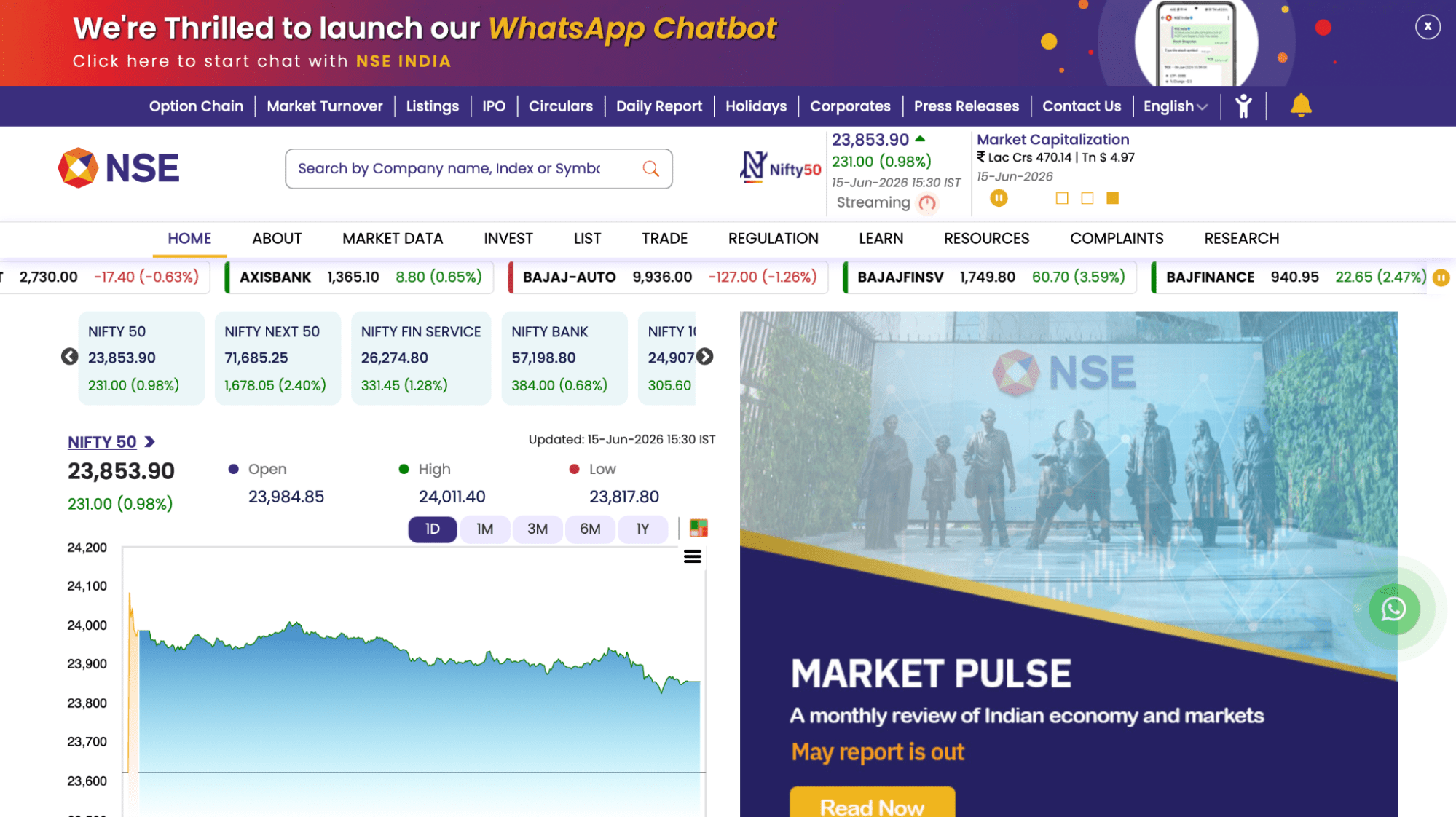
Visit NSE website www.nseindia.com
1
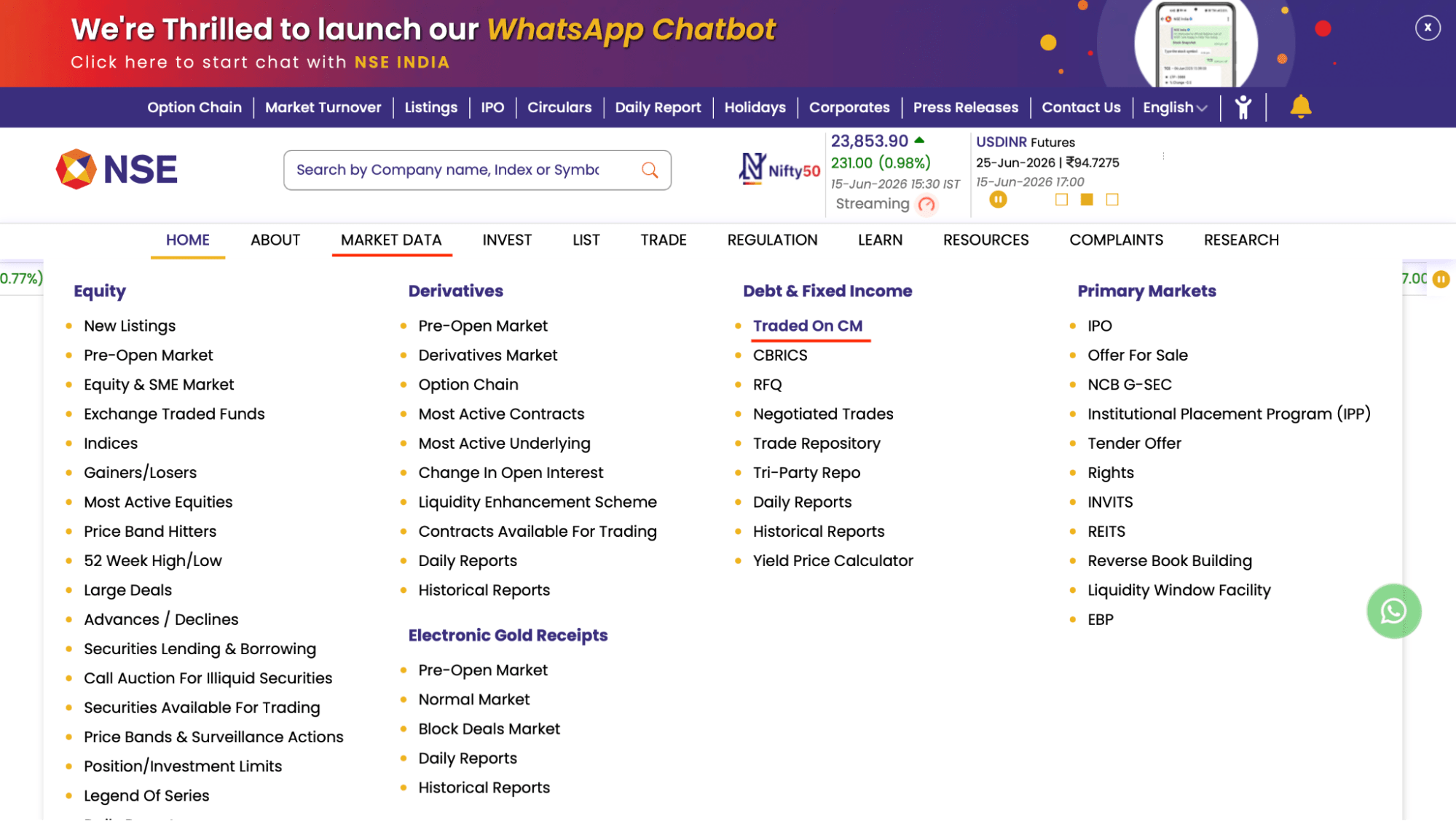
Click on the Market Data and then select Traded on CM as Highlighted with Red Underline as shown below image
2
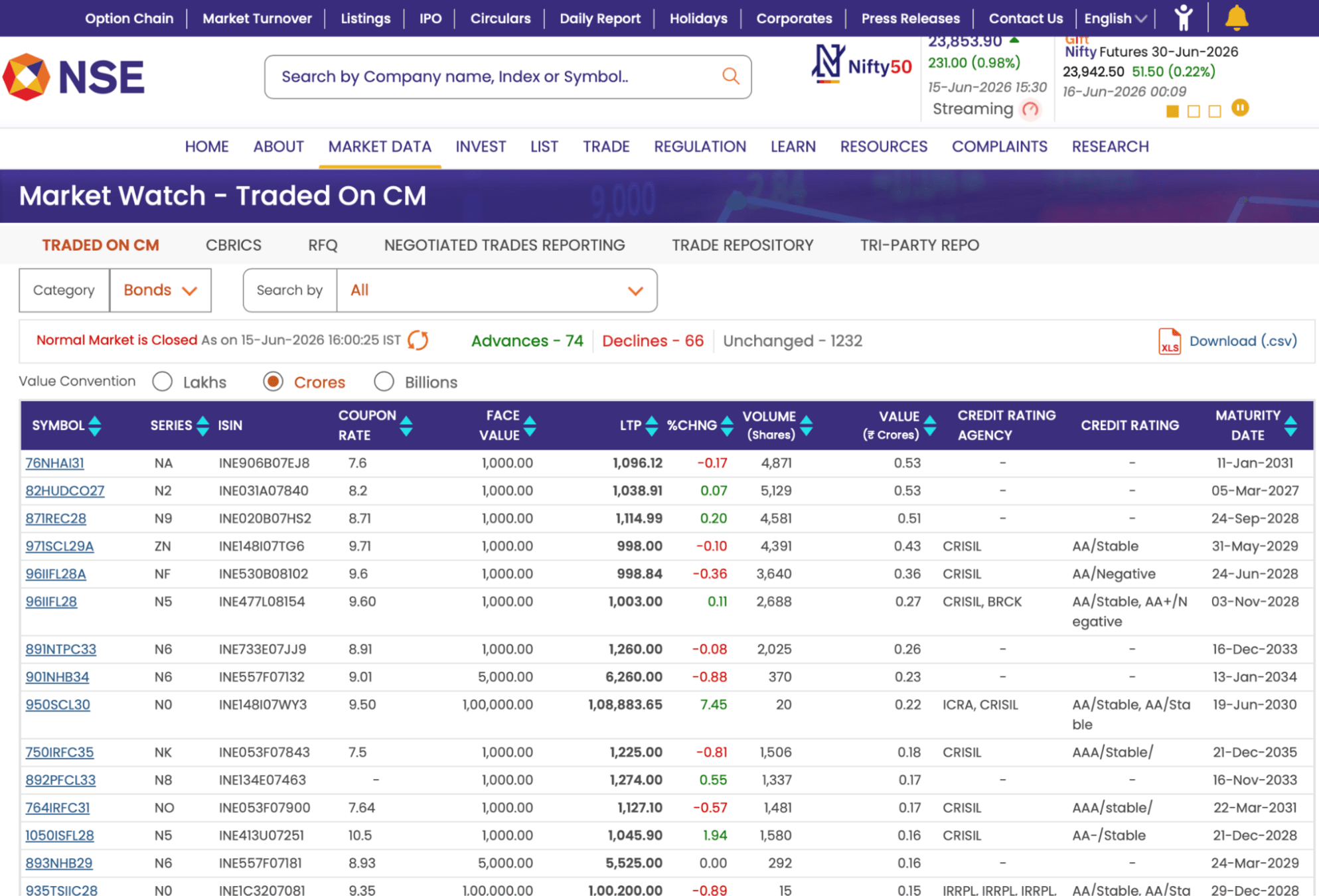
After clicking on Traded on CM, you will be directed to the Market Watch -Traded on CM page as shown below
3
From above list select any one Government Backed Bond and Private Bond and one Government Securities as shown below
4
Fill the following table as per the information from the above bonds
5
Government Securities
Government Backed Organization
Private Company Bond
| Symbol | Issuer type | Face Value | Coupon Rate | Maturity Date |
|---|---|---|---|---|
| 601GS2030 |
| 871REC28 | ||||
|---|---|---|---|---|
| 91MOFSL27 |
From the above table compare the Coupon Rate Vs Risk Factor
6
| Symbol | Issuer Type | Coupon Rate(High/Moderate/Low) | Risk Factor(High/Moderate/Low) |
|---|---|---|---|
| 601GS2030 | |||
| 871REC28 | |||
| 91MOFSL27 |
Analyze the Relationship Between Risk and Coupon Rate
7
Based on your observations, answer the following questions:
1. Which issuer category offered the lowest coupon rate?
2. Which issuer category offered the highest coupon rate?
3. What relationship do you observe between issuer risk and coupon rate?
4. Why might private companies need to offer higher coupon rates than Government issuers?
Task 2: Calculate Bond Income Using Face Value, Coupon Rate, and Maturity Period
Understand Bond Income
1
When an investor purchases a bond, they receive periodic interest payments known as coupon payments. The total income earned from the bond depends on:
Face Value
Coupon Rate
Coupon Frequency
Remaining Years to Maturity
Before calculating total income, let us analyze a real bond listed on the NSE Debt Market.
Review the Bond Details
2
Consider the following bond issued by REC Limited
| Issuer | Coupon rate | Face Value | Maturity Date |
|---|---|---|---|
| REC Limited | 8.71% | Rs.1000 | 24-Sep-2028 |
Calculate Annual Coupon Income
3
Formula:
Annual Coupon Income = Face Value × Coupon Rate
Calculation:
Annual Coupon Income = Rs.1,000 × 8.71%= 1000 x (8.71/100)
Annual Coupon Income = Rs.87.10
The bond holder receives Rs.87.10 as interest every year for each bond held.
Determine Remaining Years to Maturity
4
Calculate Total Coupon Income per bond Until Maturity
5
Formula:
Total Coupon Income per Bond = Annual Coupon Income × Remaining Years to Maturity
Calculation:
Total Coupon Income = Rs.87.10 × 2
Total Coupon Income = Rs.174.20
An investor holding one REC bond until maturity would earn approximately Rs.174.20 in coupon income, excluding any capital gain or loss
Assume the bond is being analyzed in the current year.
Maturity Date:
24-Sep-2028
Remaining Period:
Approximately 2 years
The investor will continue receiving coupon payments until the bond reaches maturity.
Calculate Total Coupon Income for total Bonds Purchased
6
Repeat the same process for the Government securities and Private Bonds selected from the NSE website and fill the following table
7
Assume that the investor purchased 100 such bonds. Then calculating total Annual Coupon Income of investors.
Total Coupon Income = Total Coupon Income per Bond x Number of Bond
Total Coupon Income = 174.20 x 100 = Rs. 17420
| Security Name | No. of Bonds Purchased | Face Value per Bond (₹) | Coupon Rate (%) | Remaining Years to Maturity | Annual Coupon Income (₹) | Total Coupon Income Till Maturity (₹) |
|---|---|---|---|---|---|---|
| REC Bond | 100 | 1,000 | 8.71 | 2 | 8,710 | 17,420 |
| Gov. Security | 100 |
| Private Corporate Bond | 100 |
|---|
Congratulations on completing this lab!
You analyzed coupon rates across different bond issuers and understood how issuer risk influences investor returns. You also calculated bond income using face value, coupon rate, number of bonds purchased, and maturity period, building a strong foundation for understanding bond cash flows and future topics such as coupon frequency and Yield to Maturity (YTM).
Checkpoint
Next-Lab Preparation
Topic : Fixed Income Technicals
1) Yield and price relationship
2) Yield to maturity
3) Yield curve meaning and applications
4) Day count conventions (ACT/360, ACT/365, 30/360)
By Content ITV