




Content ITV PRO
This is Itvedant Content department
Impact of bank rates
Learning Outcome
5
Understand the impact of RBI policies on banks and consumers.
4
Differentiate between CRR and SLR.
3
Analyze the impact on loans and EMIs.
2
Learn how RBI controls inflation and growth.
1
Understand Repo Rate, Reverse Repo Rate, CRR, and SLR.
Repo Rate
The rate at which the RBI provides short-term funds to commercial banks. It is the RBI's primary tool to steer interest rates in the economy.
Impact on Repo Rate when it goes DOWN:
→ Banks get cheaper funds from RBI
→ Banks pass on lower rates to customers
→ Loans become cheaper → More borrowing → Economy grows faster
Impact on Repo Rate when it goes UP:
→ Banks borrow at a higher cost from RBI
→ Banks raise their own lending rates (MCLR rises)
→ Loans become expensive → Borrowing slows → Inflation cools down
Real-Life Example:
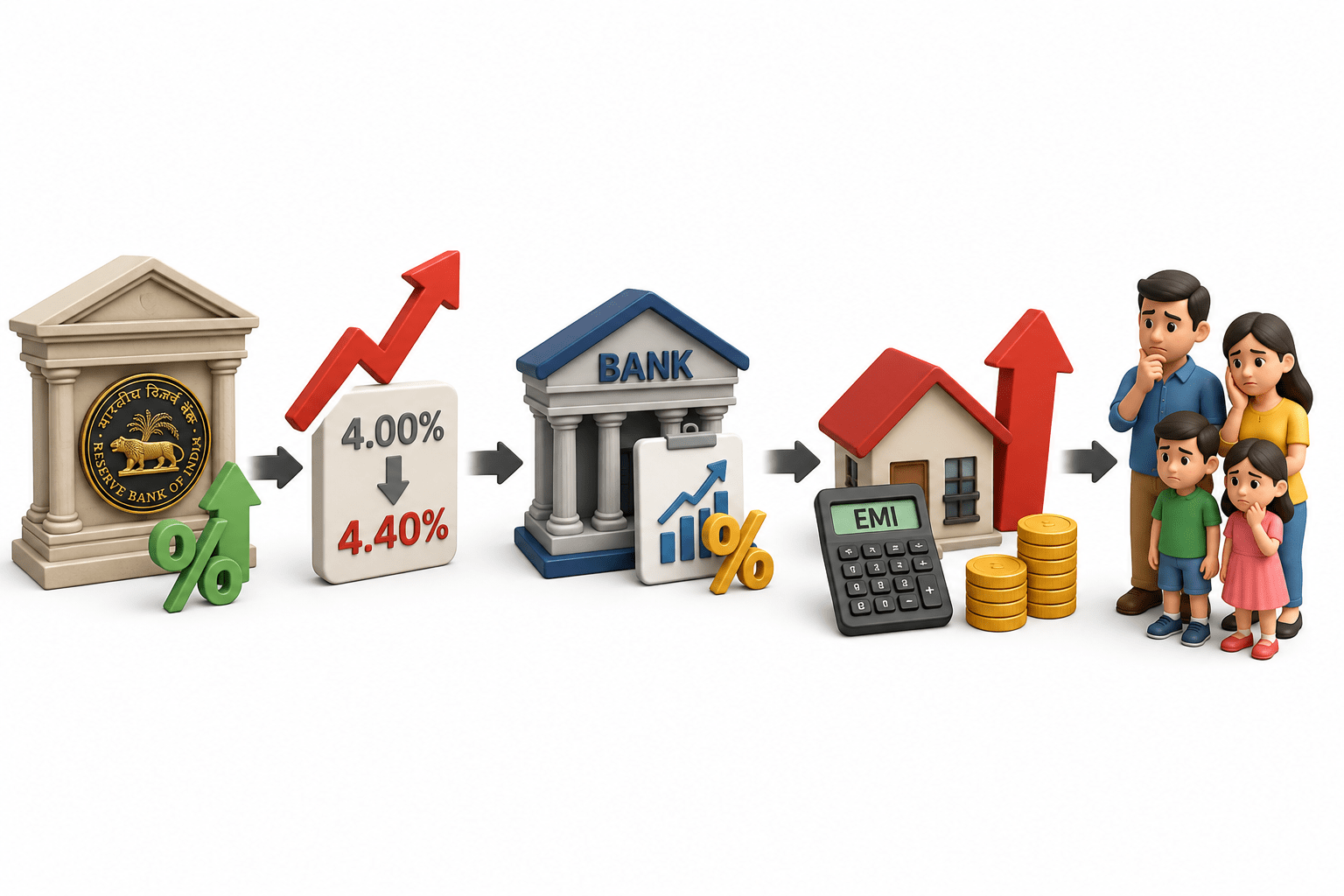
In May 2022, RBI raised the Repo Rate from 4.00% to 4.40%.
Major banks increased home loan rates shortly after.
EMIs on home loans rose significantly.
Borrowers across the country felt the impact directly.
Reverse Repo Rate → Controls the Floor of Rates
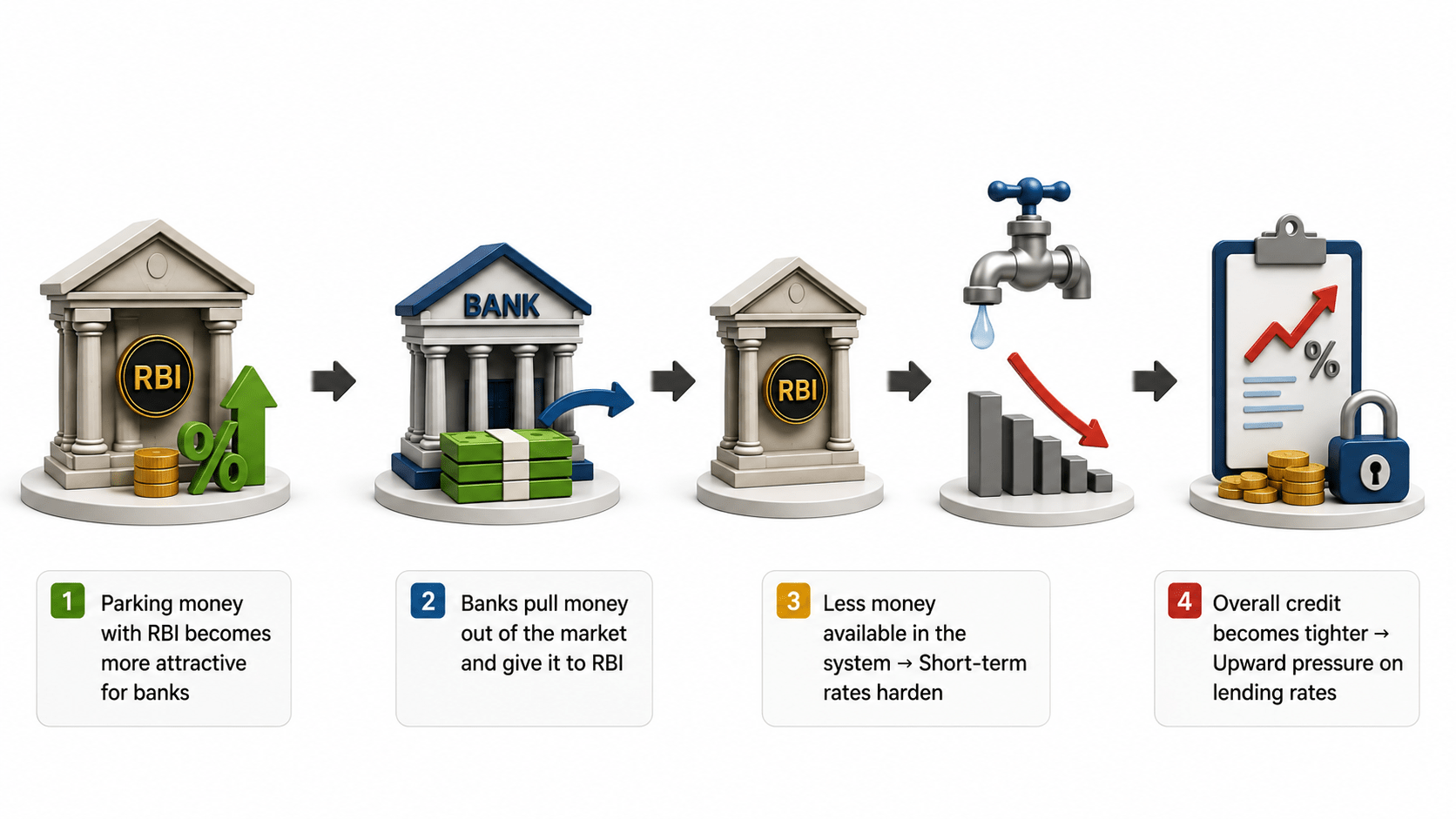
The rate at which the RBI borrows money from commercial banks. When banks have surplus cash, they park it with the RBI at this rate.
Impact on Reverse Repo Rate when it goes UP:
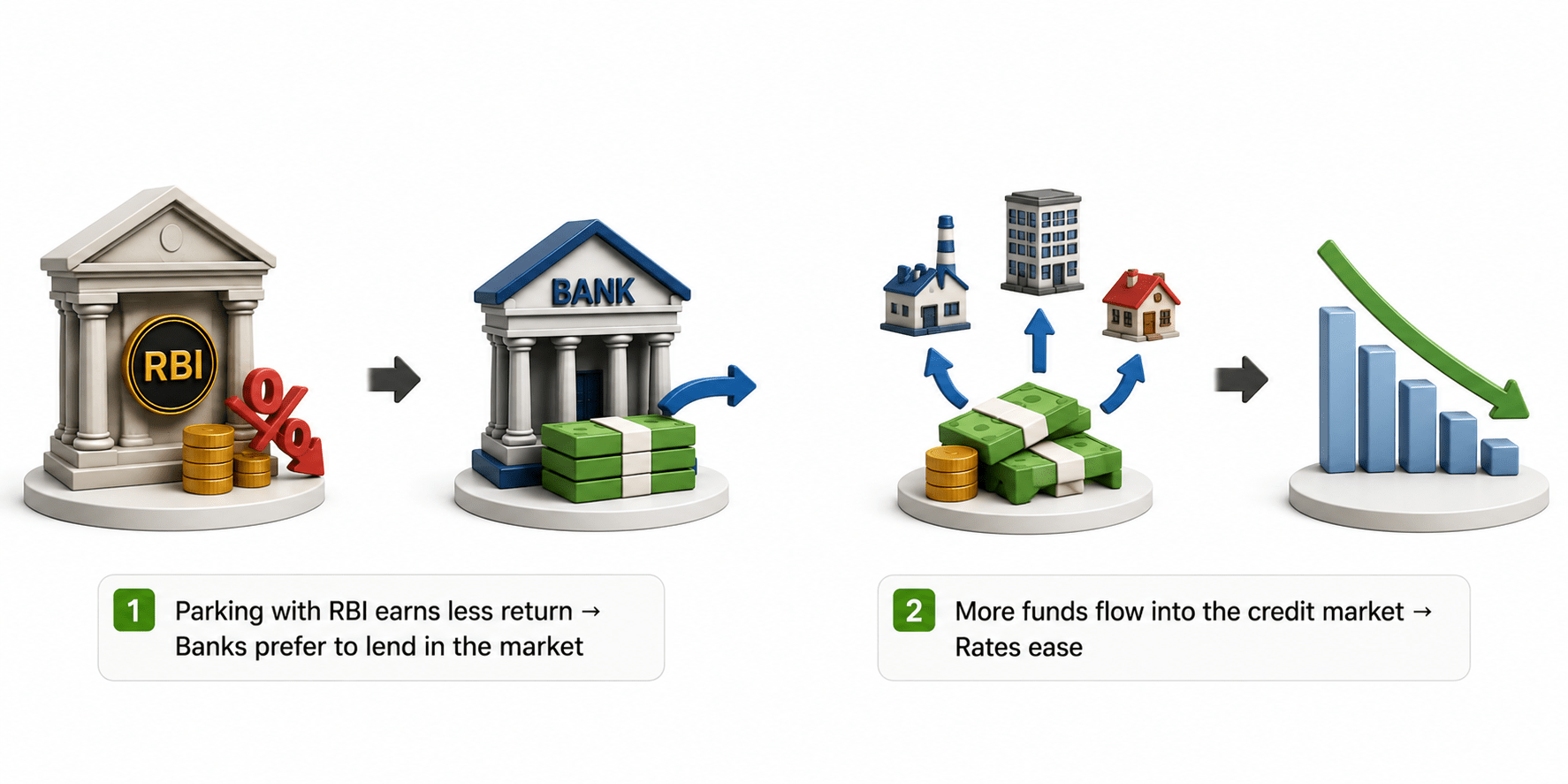
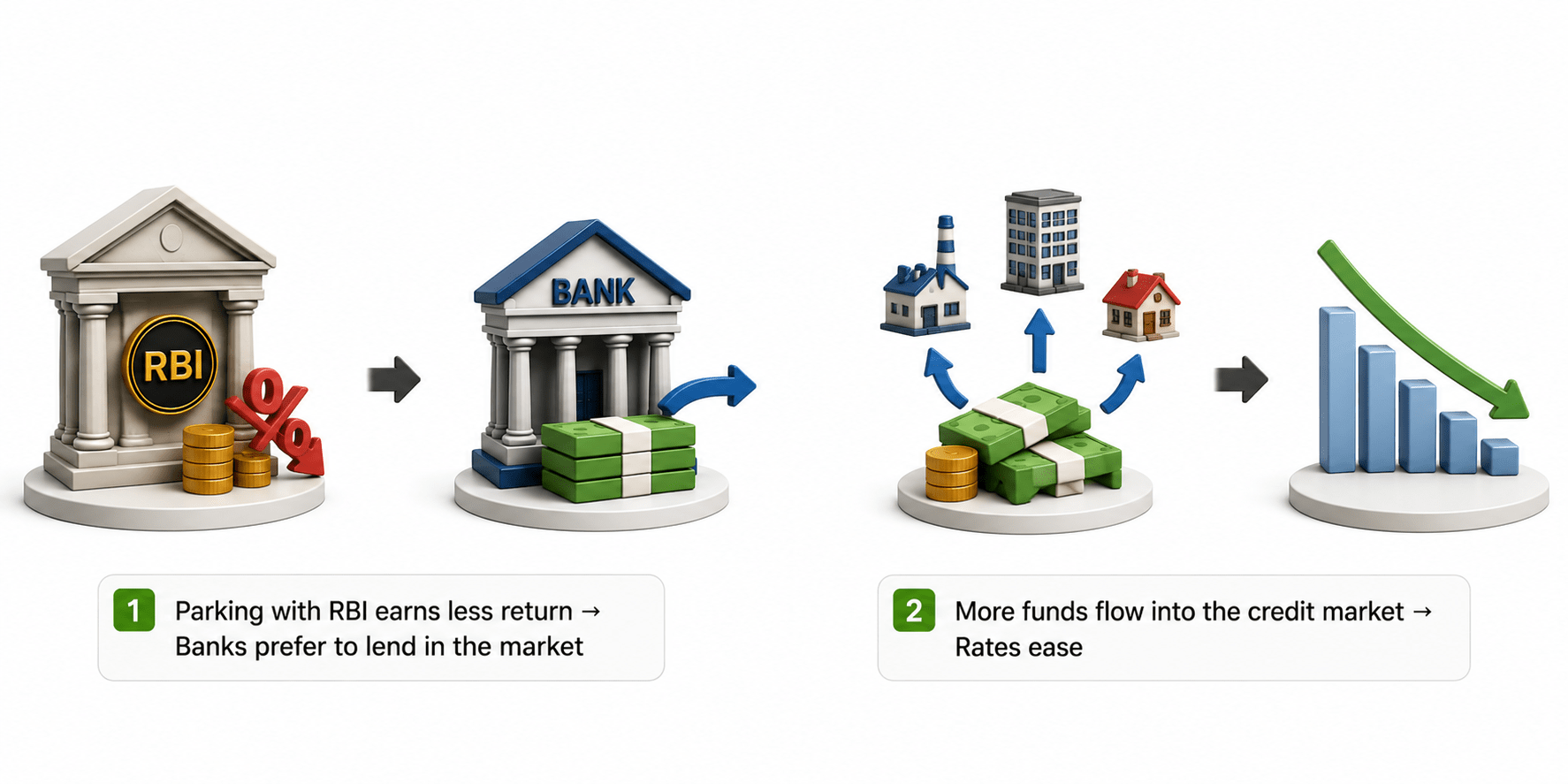
Impact on Reverse Repo Rate when it goes DOWN:
Real-Life Example:
During COVID (2020), RBI slashed Reverse Repo Rate from 4.00% to 3.35% to push banks to stop "lazy banking" — i.e., parking money with RBI instead of lending it to businesses. Banks were nudged to lend more to MSMEs and individuals to revive the economy.
Note: Reverse Repo Rate does not change the Bank Rate directly. It sets the floor for market interest rates.
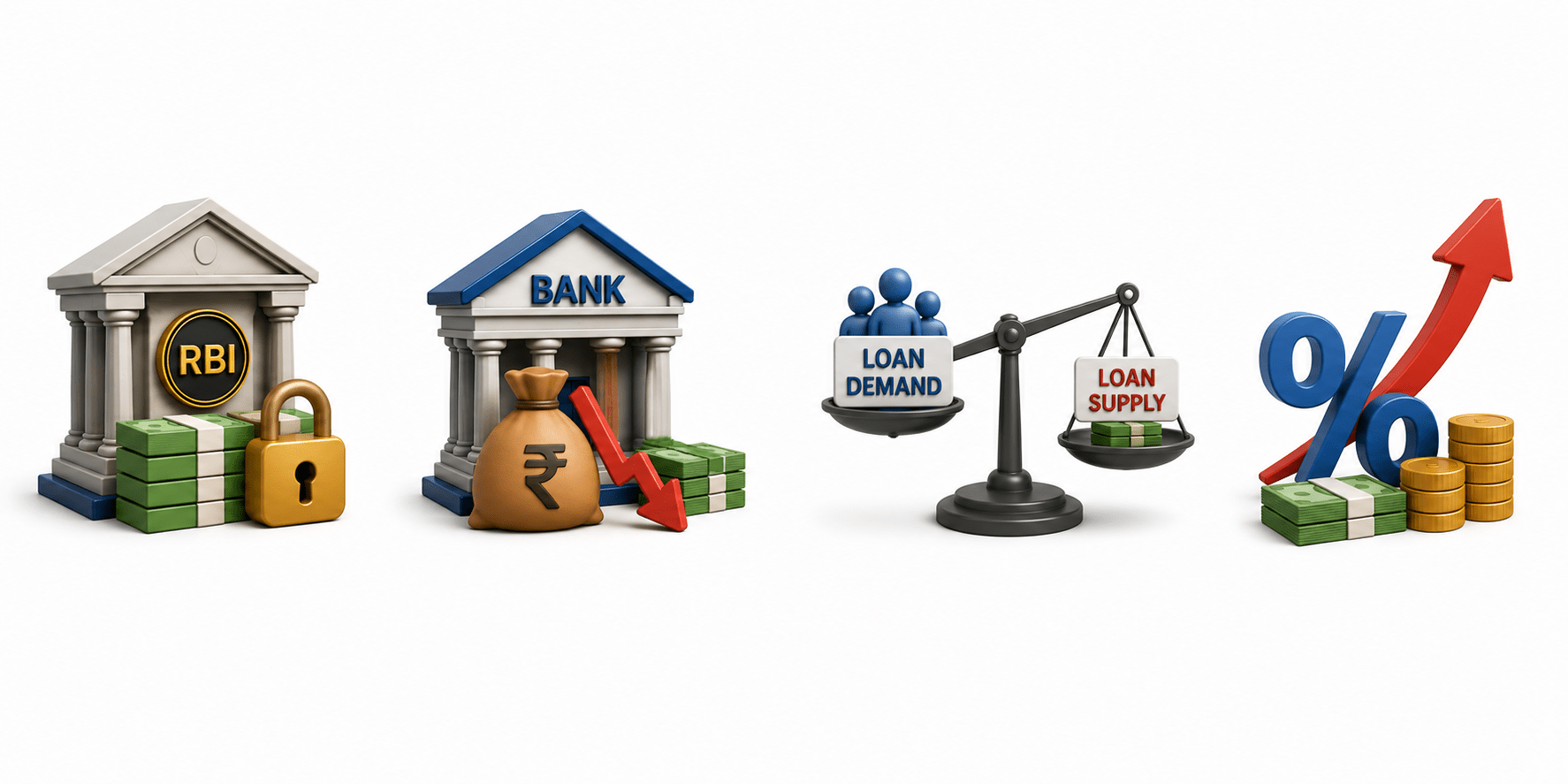
CRR (Cash Reserve Ratio) → Locks Bank Money, Raises Rates
Every bank must keep a fixed percentage of its total deposits as cash with the RBI. This money earns no interest and cannot be used for lending.
Impact on CRR when it goes UP:
More cash is locked with RBI → Banks have less money to lend
Less credit supply → Demand for loans stays same but supply shrinks
Banks raise lending rates to protect profit margins
Effective cost of borrowing rises
Impact on CRR when it goes DOWN:
Banks free up more cash for lending
Text
Text
Summary
5
RBI uses both to manage liquidity and inflation.
4
Higher Reverse Repo = More funds parked with RBI.
3
Higher Repo = Costlier loans.
2
Reverse Repo Rate: Rate banks earn from RBI deposits.
1
Repo Rate: Rate at which banks borrow from RBI.
Quiz
Repo Rate is the rate at which:
A. Customers borrow from banks
B. Banks borrow from RBI
C. RBI borrows from banks
D. Companies borrow from banks
Quiz-Answer
Repo Rate is the rate at which:
A. Customers borrow from banks
B. Banks borrow from RBI
C. RBI borrows from banks
D. Companies borrow from banks
By Content ITV