























Content ITV PRO
This is Itvedant Content department
Learning Outcome
5
Use external variables in forecasting
4
Implement SARIMAX in Python
3
Interpret SARIMAX parameters
2
Identify seasonality in time series data
1
Understand SARIMAX model concept
You already know:
Activation Functions
Loss Functions
Optimization Techniques
Now, we move into Time Series Forecasting
An airline company wants to predict next year's passenger demand.
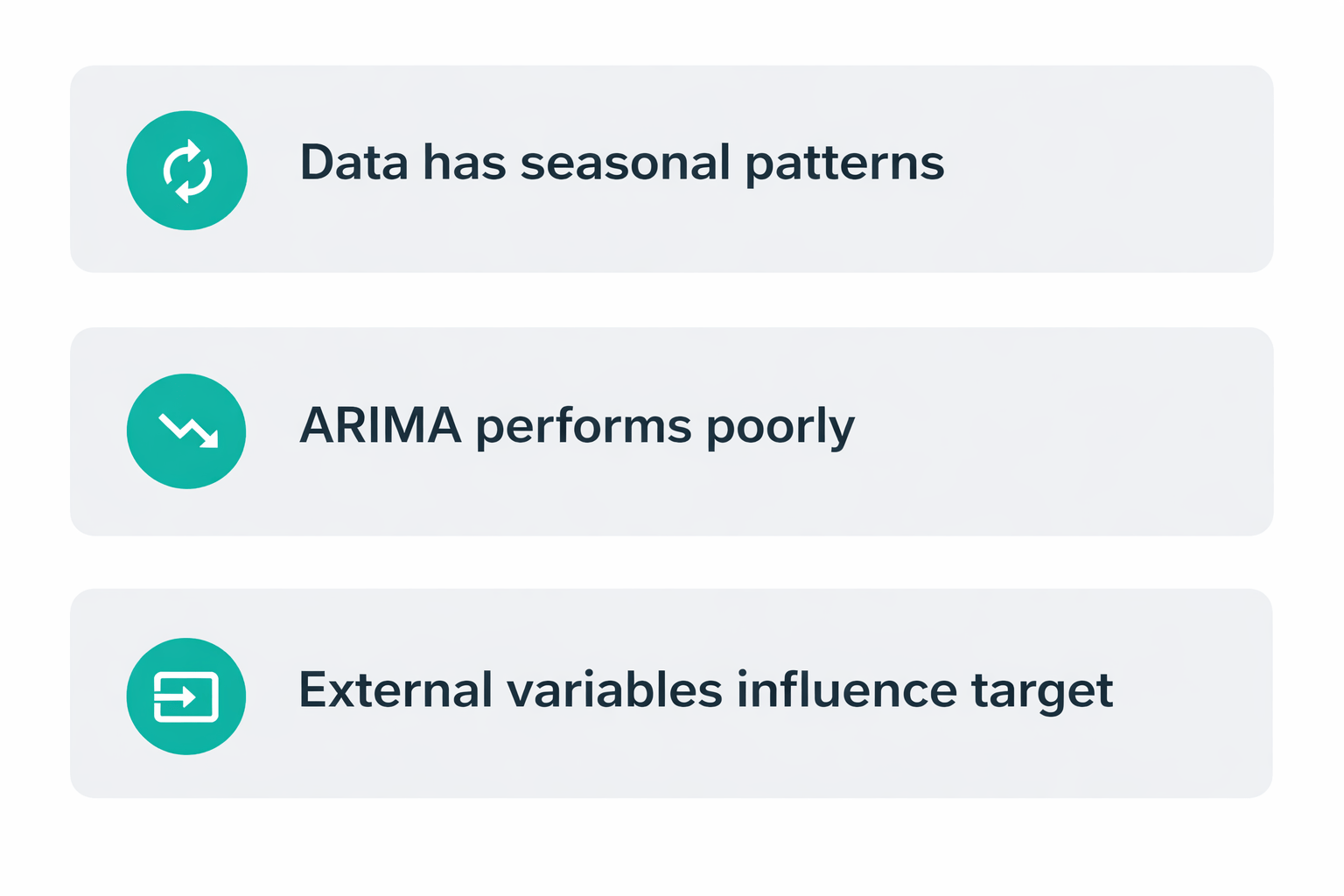
But the data shows:
Question:
Which model can capture trend + seasonality + external factors?
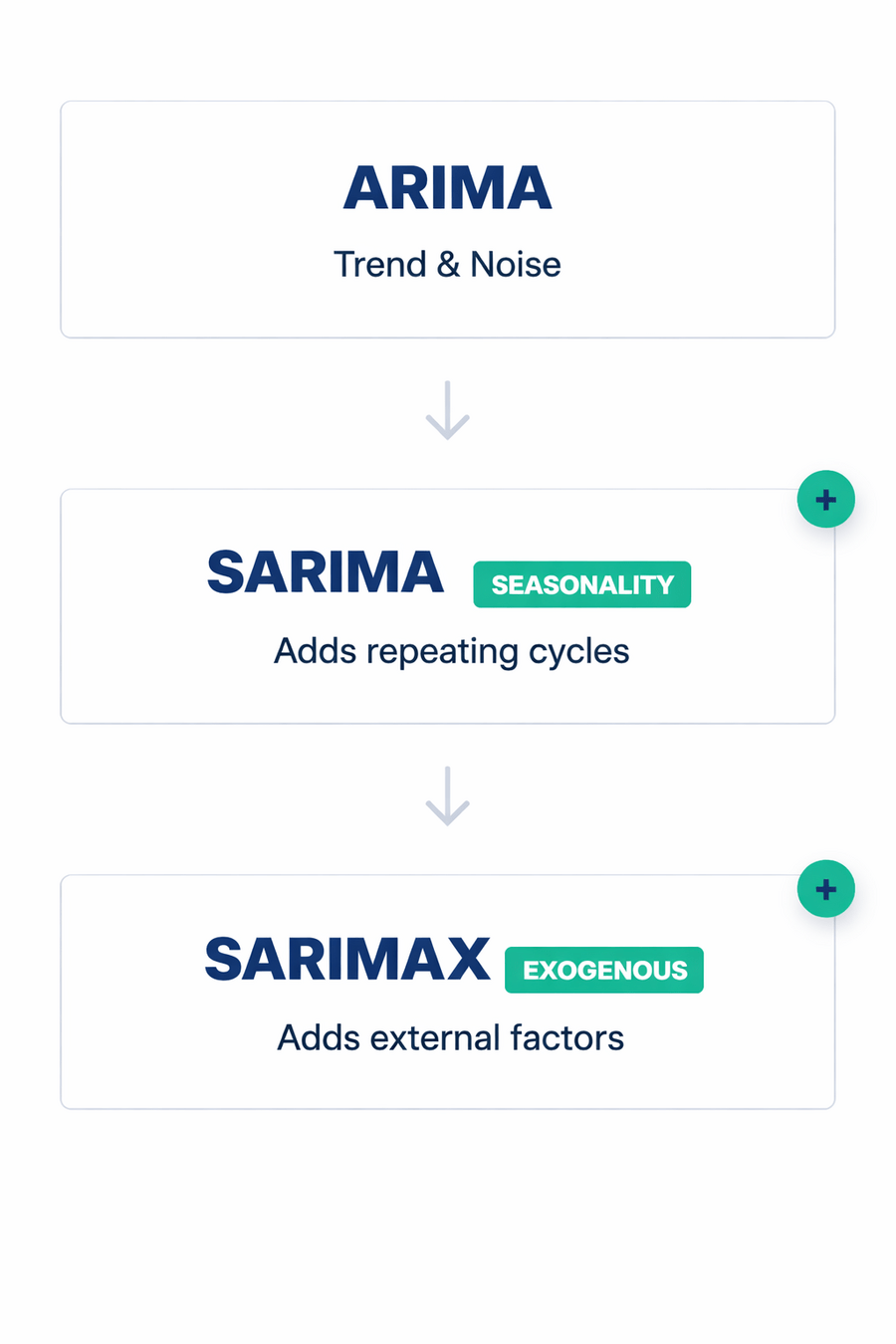
ARIMA works well for:
So ARIMA alone is not sufficient for this problem
So you need a model that handles ALL THREE together
But struggles with:
Meet SARIMAX
S - Seasonal
AR - AutoRegressive
I - Integrated
MA - Moving Average
X - eXogenous
SARIMAX =
It extends the standard ARIMA model by adding two critical capabilities:
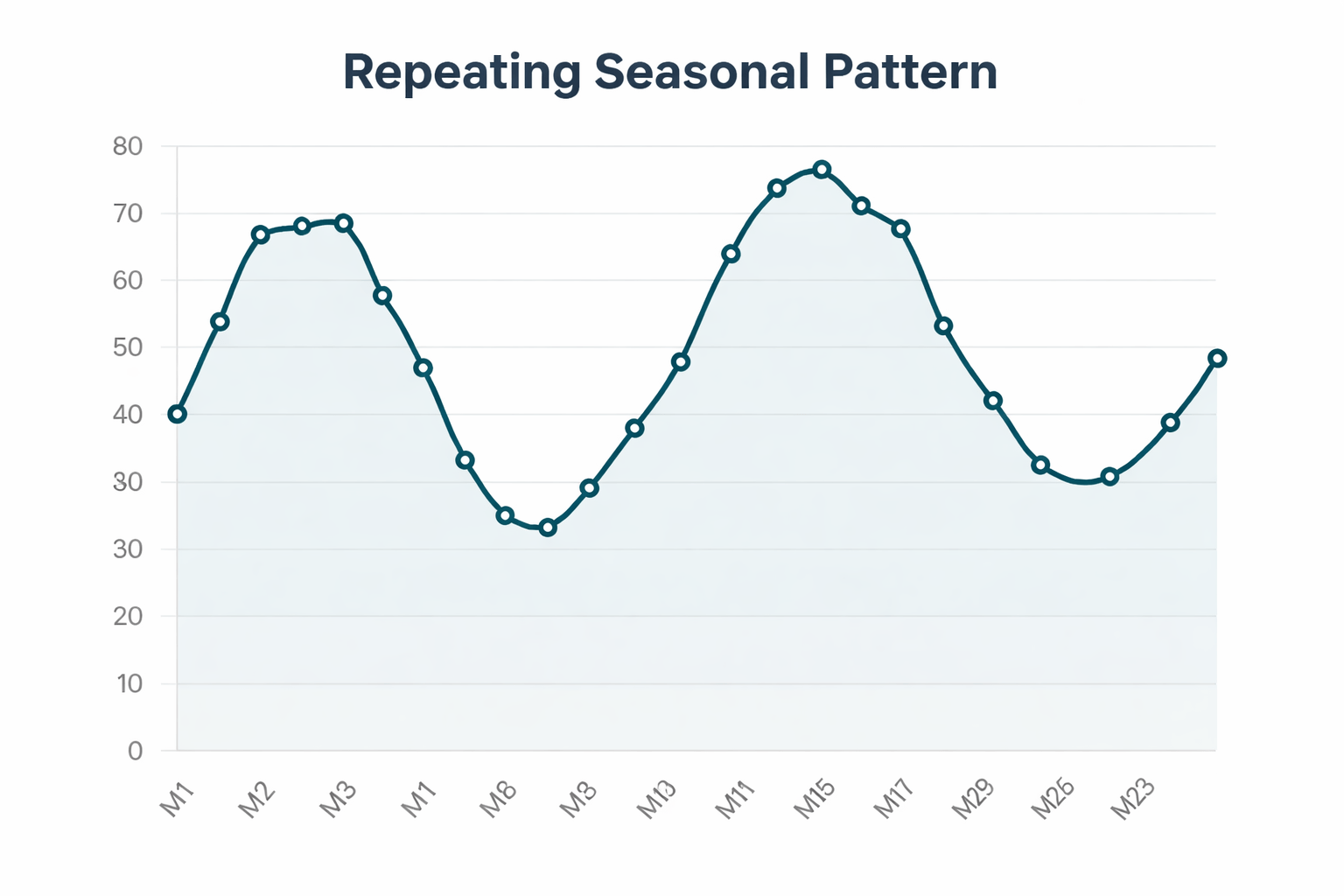
1. Seasonality - Captures repeating cycles (e.g., yearly sales spikes).
2. External Variables - Incorporates outside data (e.g., marketing spend, holidays).
What Problems Does SARIMAX Solves
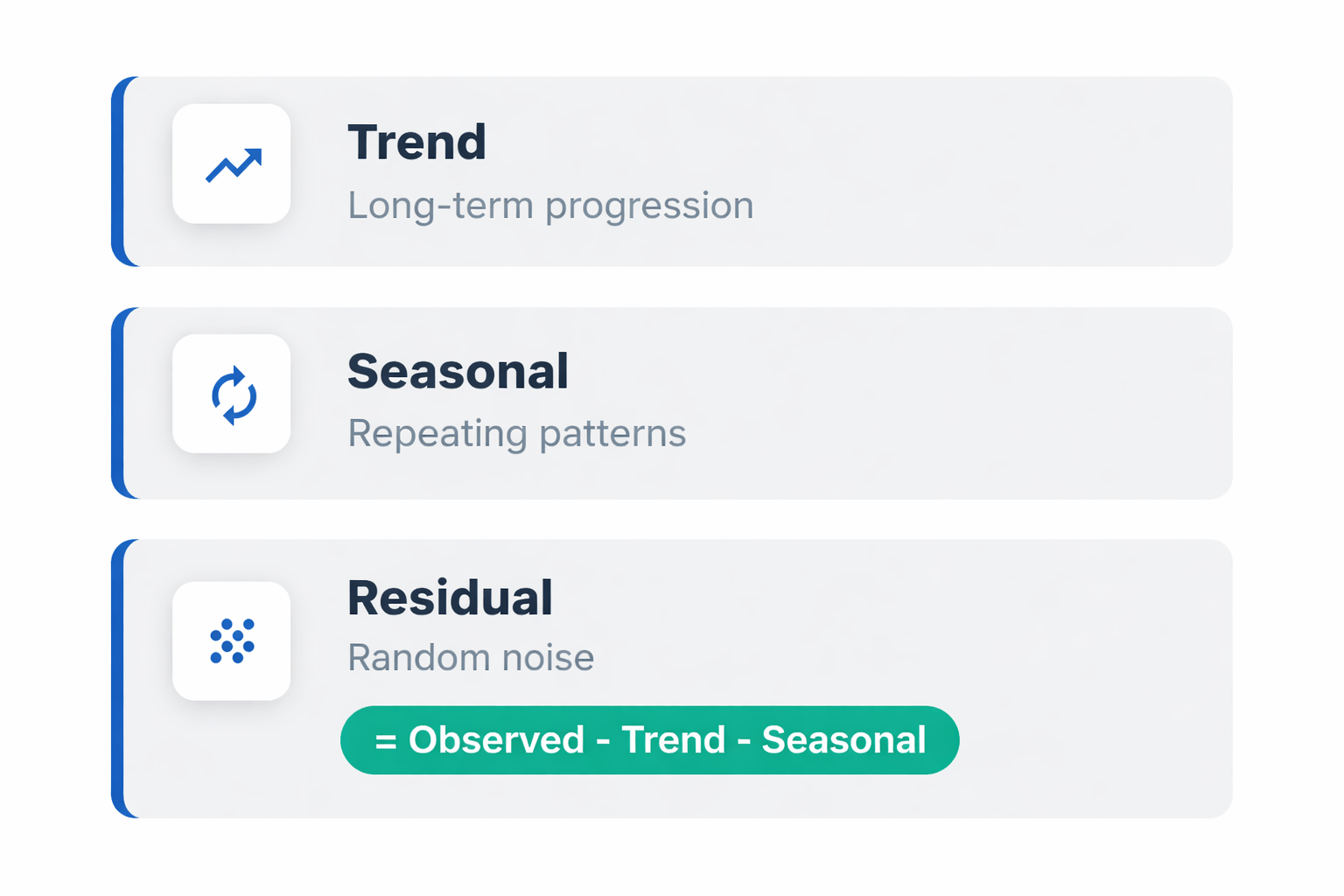
Trend
Seasonality
External variables
Missing values
Shows long-term movement in data (increasing, decreasing, or stable over time).
Repeating short-term patterns in data (weekly, quarterly, yearly).
Incorporates variables outside the main time series that influence the target.
Random variation left after removing the main pattern.
SARIMAX Model Format
SARIMAX(p, d, q)(P, D, Q, s)
Two components:
Non-seasonal parameters
Seasonal parameters
(p, d, q)
(P, D, Q, s)
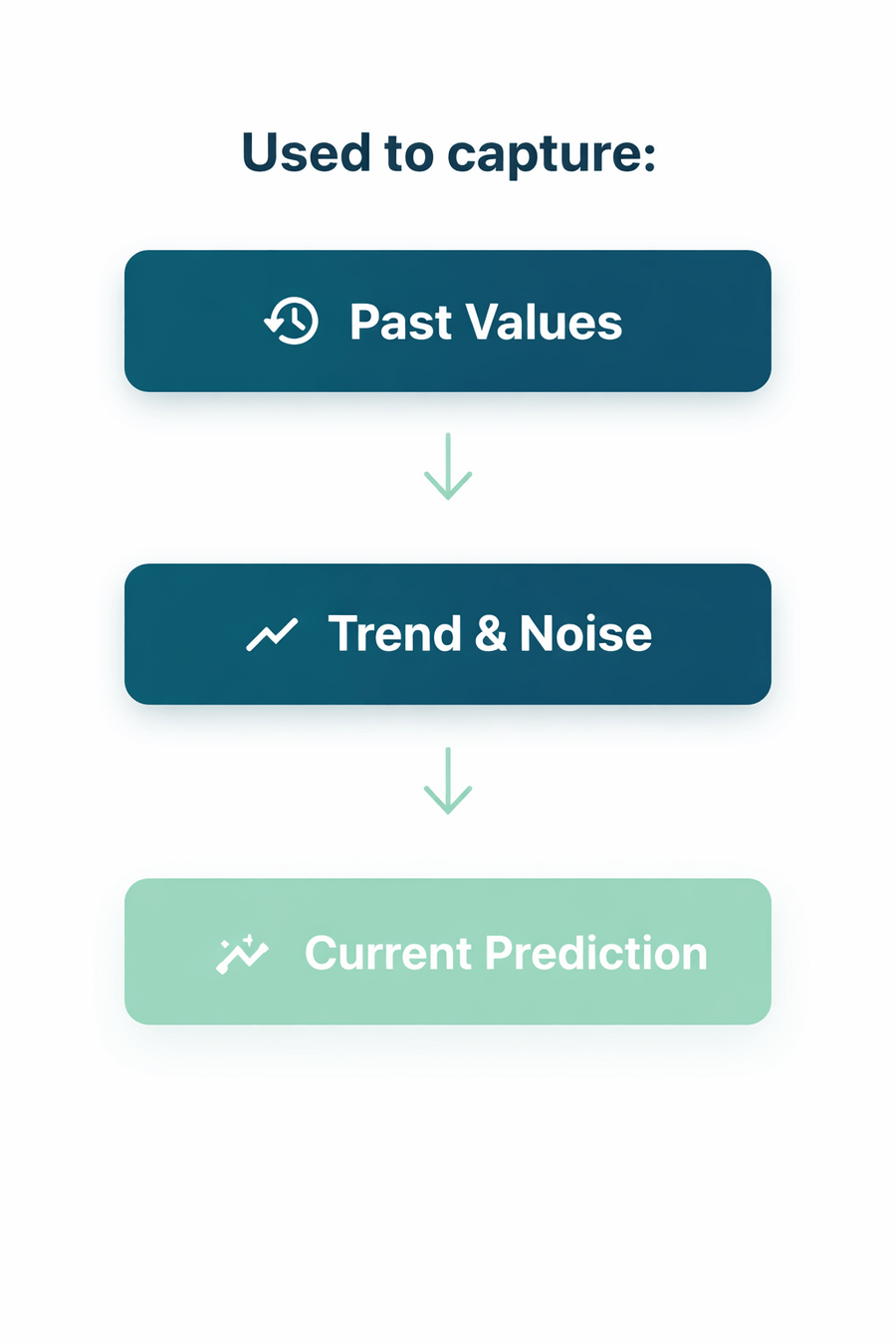
Captures trend and noise patterns in the time series data
Models repeating cycles and periodic patterns in the data
Core ARIMA Parameters
AutoRegression
Uses past values to predict current value
Removes trend by subtracting previous value
Uses past forecast errors in model
Differencing
Moving Average
Seasonal Components
AutoRegressive component for seasonal patterns
Remove seasonality by subtracting previous season
Moving Average component for seasonal patterns
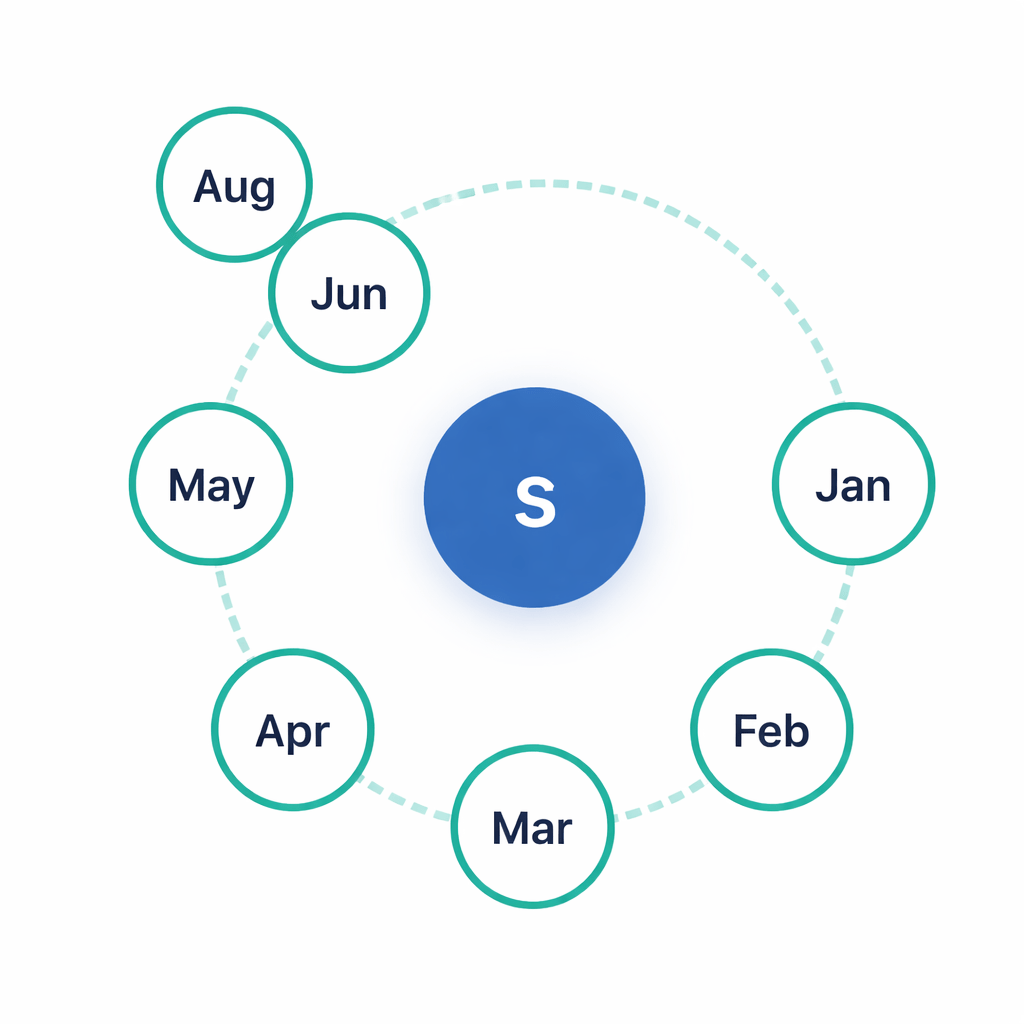
Number of Periods per Season
Seasonal cycle length
Seasonal MA
Seasonal differencing
Seasonal AR
Example:
s = 12
for monthly yearly seasonality
External Factors in Forecasting
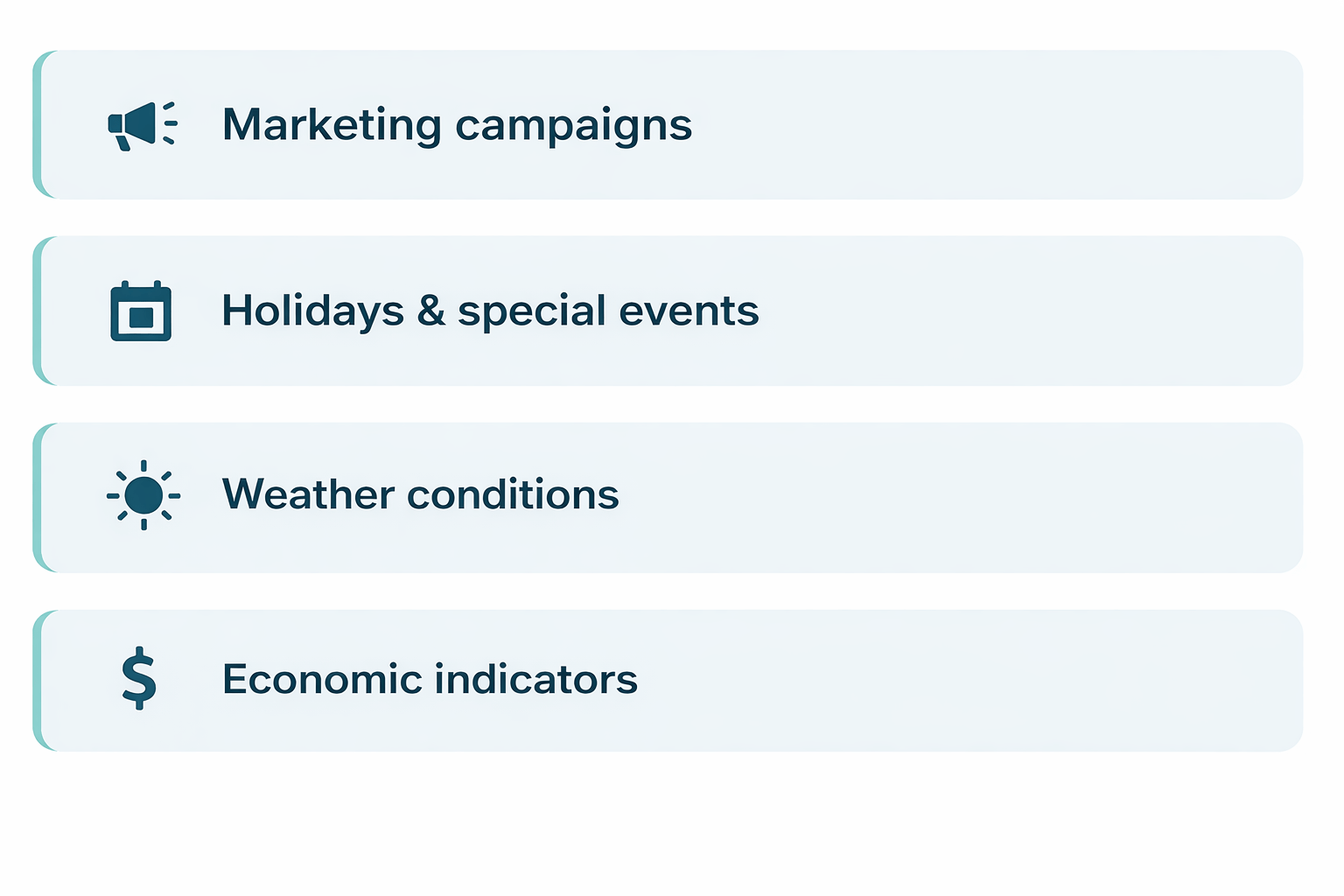
Sometimes external factors significantly affect your time series data.
SARIMAX allows adding exogenous variables
Use SARIMAX When
How to Detect Seasonality
Visual methods:
Statistical methods:
Breaking Down Time Series
Seasonal Decomposition Separated data into distinct components to understand underlying patterns
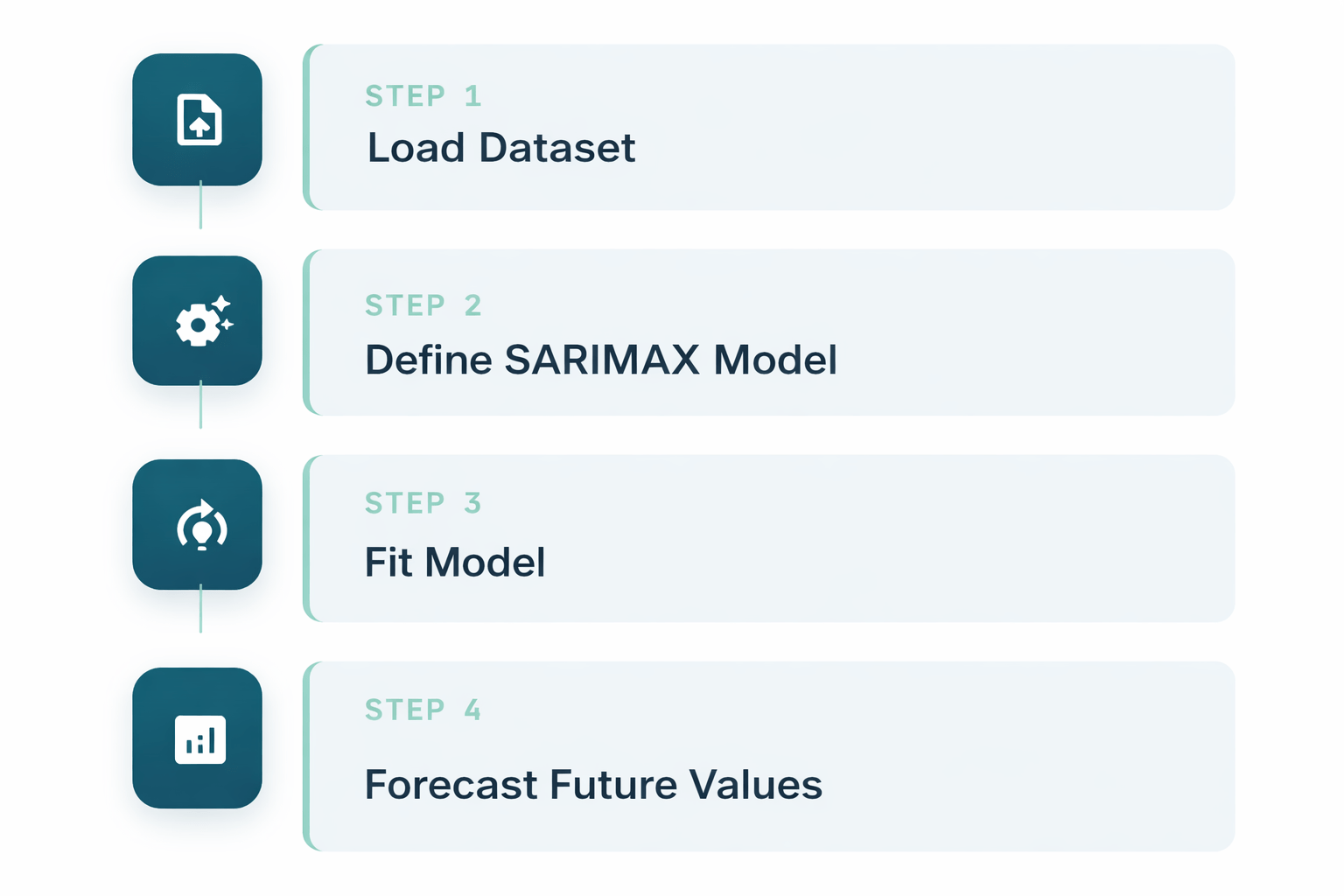
SARIMAX in Python
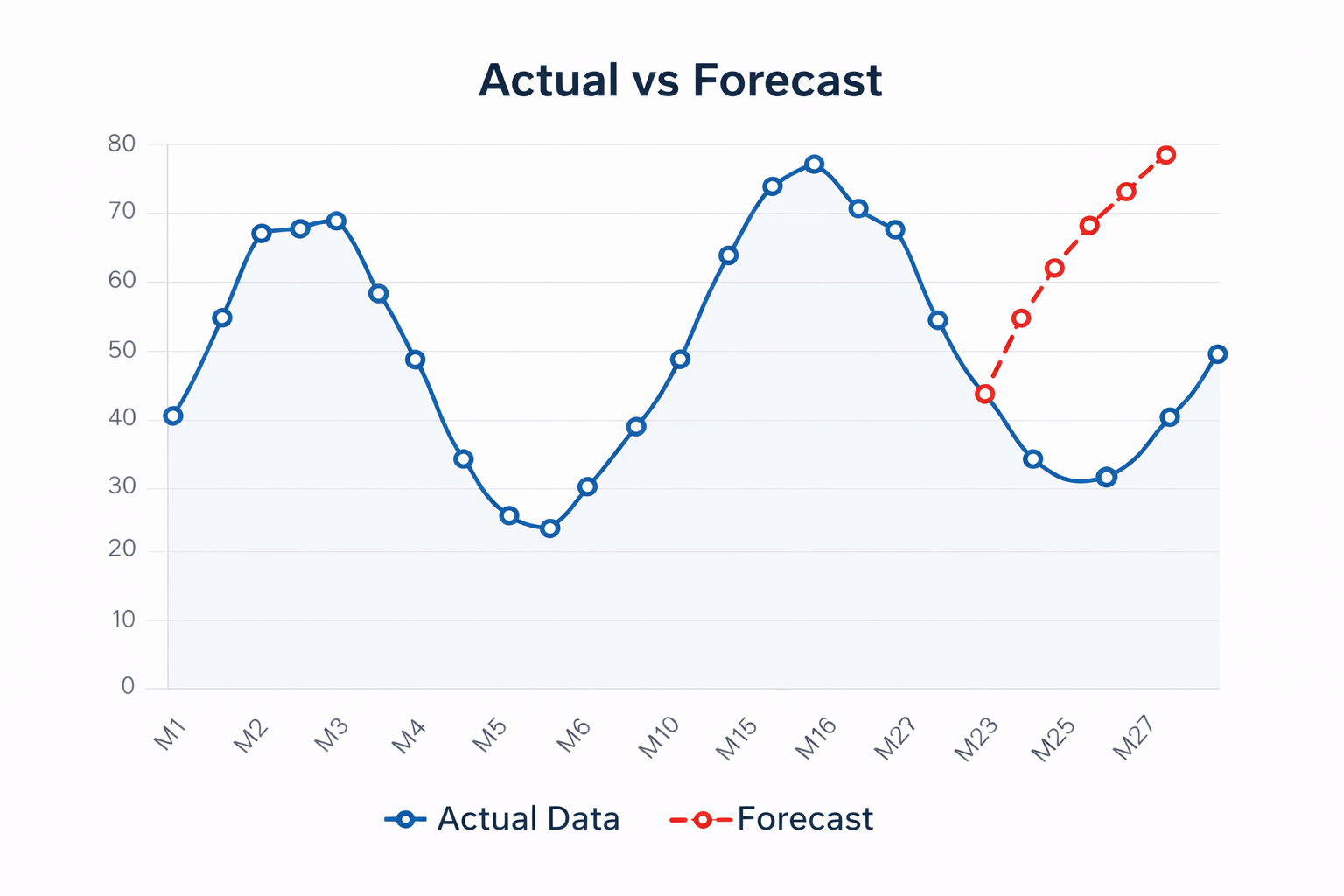
Forecast Output
Model predicts future values based on patterns
Historical data
Seasonal pattern
Learns from past values and trends
Applies repeating cycles to the forecast
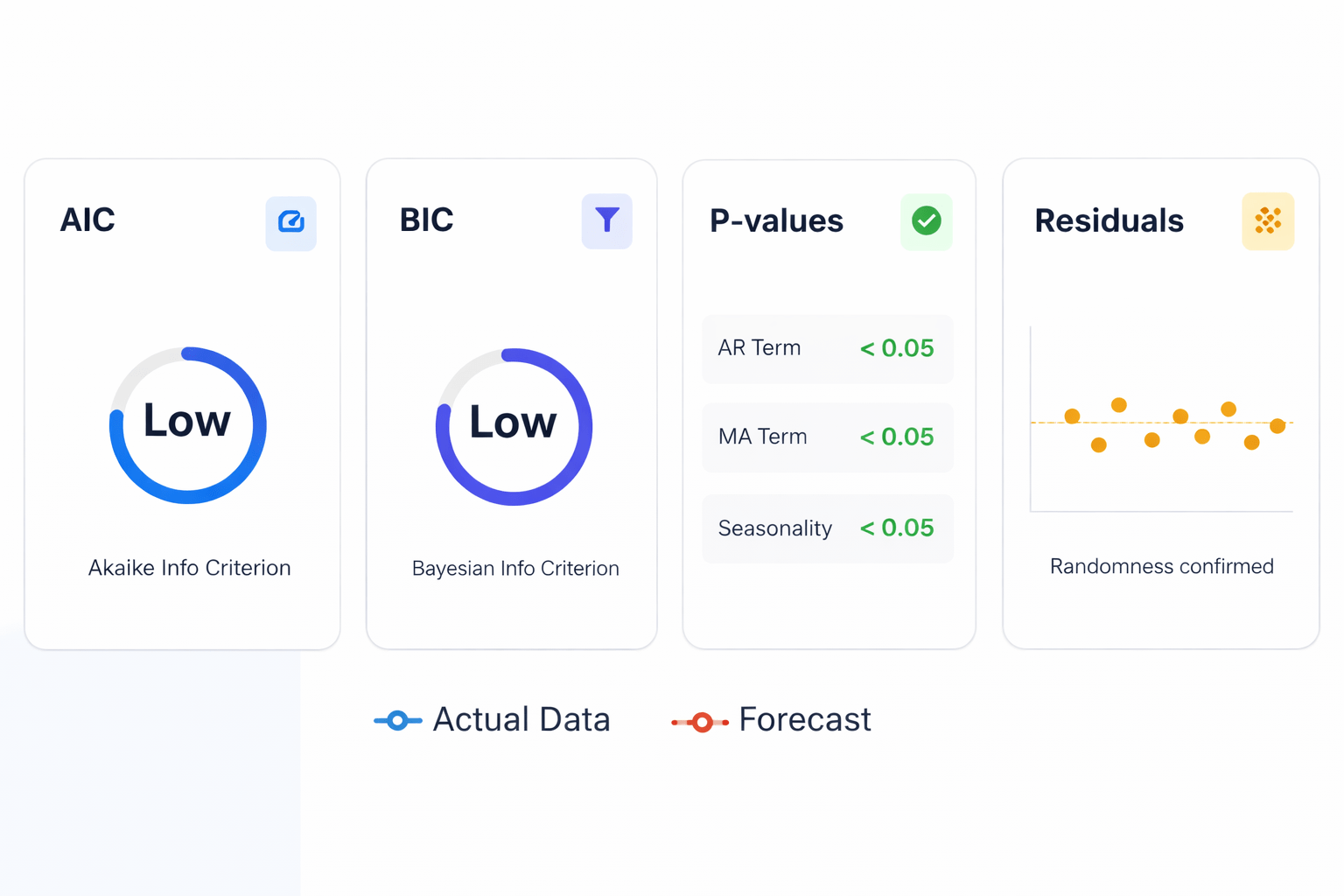
Evaluating the Model
Key metrics to assess performance
Summary
5
Widely used for business and demand forecasting
4
Seasonality detected using plots and ACF/PACF
3
Model defined as (p,d,q)(P,D,Q,s)
2
Captures trend, seasonality, and external factors
1
SARIMAX extends ARIMA to handle seasonal data
Quiz
Which parameter represents the seasonal cycle length in SARIMAX?
A. p
B. q
C. s
D. d
Quiz-Answer
Which parameter represents the seasonal cycle length in SARIMAX?
A. p
B. q
C. s
D. d
By Content ITV