Repo and Securities Lending


Collateral


Learning Outcome
5
Calculate cash received after a haircut.
4
Identify different types of collateral.
3
Understand the purpose of haircuts.
2
Learn how collateral reduces credit risk.
1
Understand collateral and its importance.
What is Collateral?
Collateral is an asset pledged as security for a loan. If the borrower defaults, the lender can sell the asset to recover the money.
|
NEWSPAPER EXAMPLE |
|
"Yes Bank pledges shares worth ₹2,000 cr as collateral to raise funds" — Business Standard |
|
In 2020, Yes Bank's promoters pledged shares of the bank itself as collateral to raise emergency funds from lenders. This is a common practice among promoters — they pledge their equity stake in a company to a lender. The lender holds the shares; if the promoter cannot repay, the lender sells the shares in the market to recover the loan. |
|
Source: Business Standard, March 2020 |

What is a Haircut?
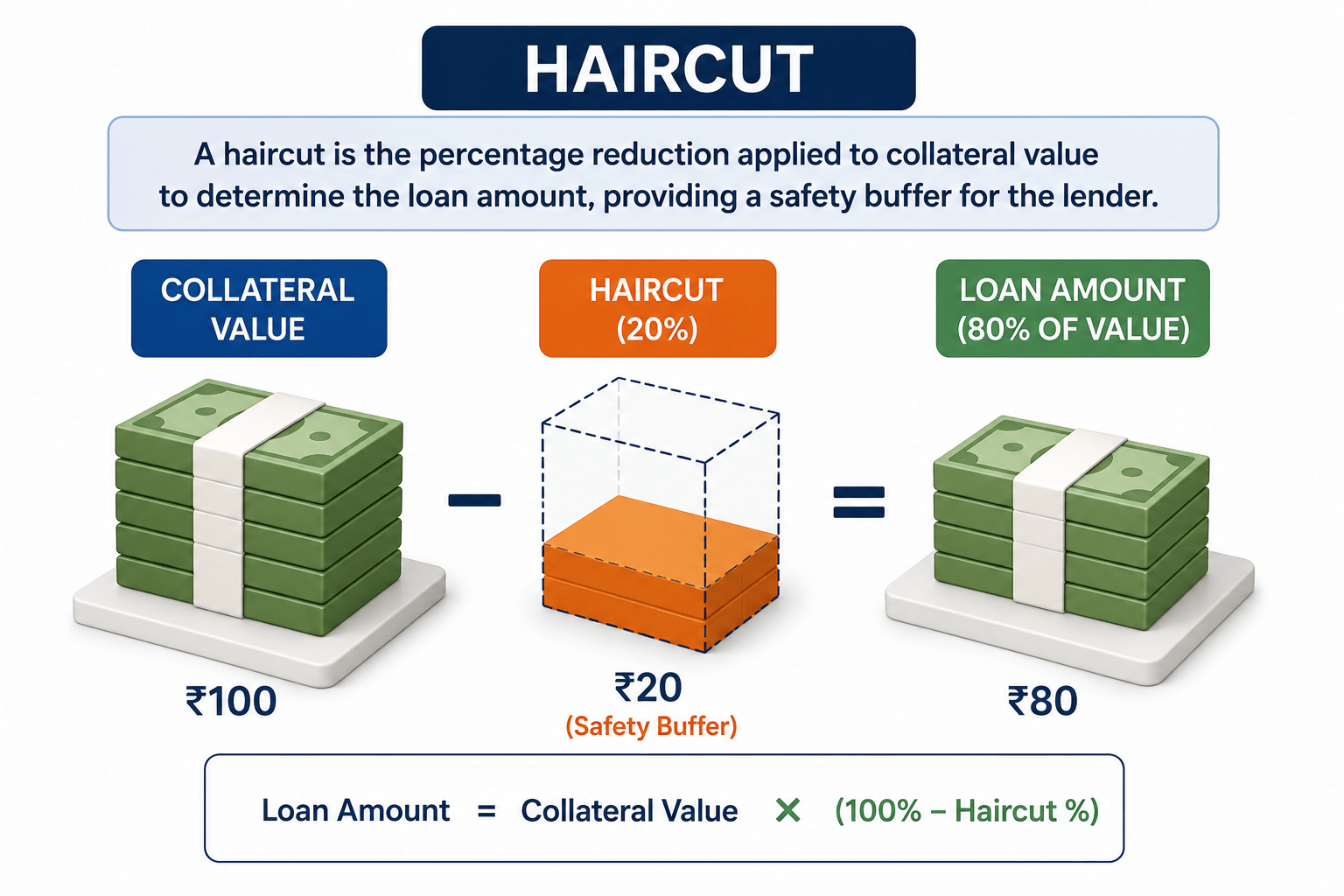
A haircut is the percentage reduction applied to collateral value to determine the loan amount, providing a safety buffer for the lender.
Why Does a Haircut Exist?
A haircut protects the lender against potential losses if the borrower defaults and the collateral value declines.
Simple Formula:
Cash Received = Market Value of Collateral - (Market value of collateral × Haircut %)
Example: G-Sec worth ₹1,00,000 with 2% haircut = ₹98,000 cash received
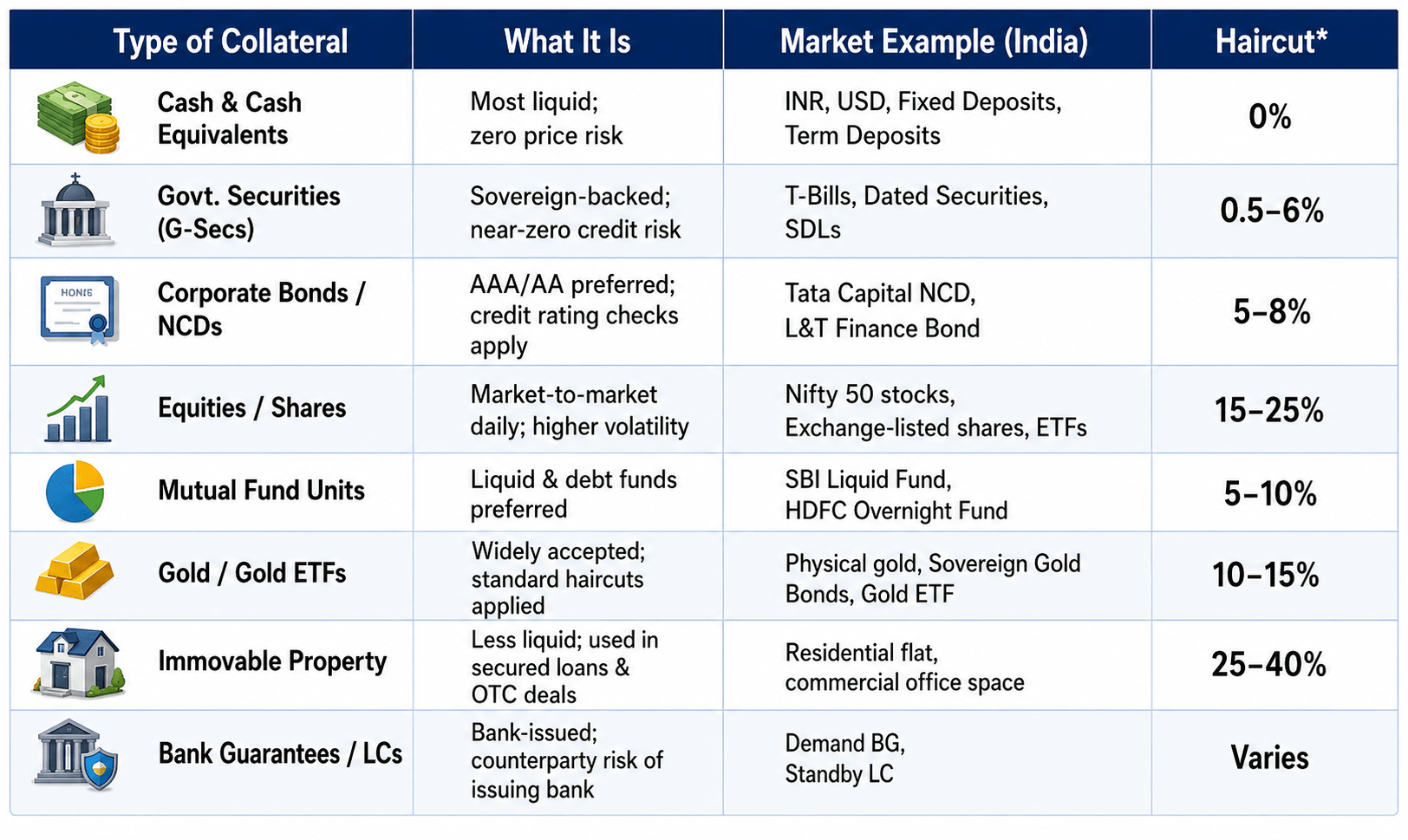
Haircut Comparison Across Collateral Types

Types of Collateral Accepted in the Market
Summary
5
RBI uses both to manage liquidity and inflation.
4
Higher Reverse Repo = More funds parked with RBI.
3
Higher Repo = Costlier loans.
2
Reverse Repo Rate: Rate banks earn from RBI deposits.
1
Repo Rate: Rate at which banks borrow from RBI.
Quiz
Repo Rate is the rate at which:
A. Customers borrow from banks
B. Banks borrow from RBI
C. RBI borrows from banks
D. Companies borrow from banks

Quiz-Answer
Repo Rate is the rate at which:
A. Customers borrow from banks
B. Banks borrow from RBI
C. RBI borrows from banks
D. Companies borrow from banks