Market Participants and Infrastructure


Role of stock exchanges
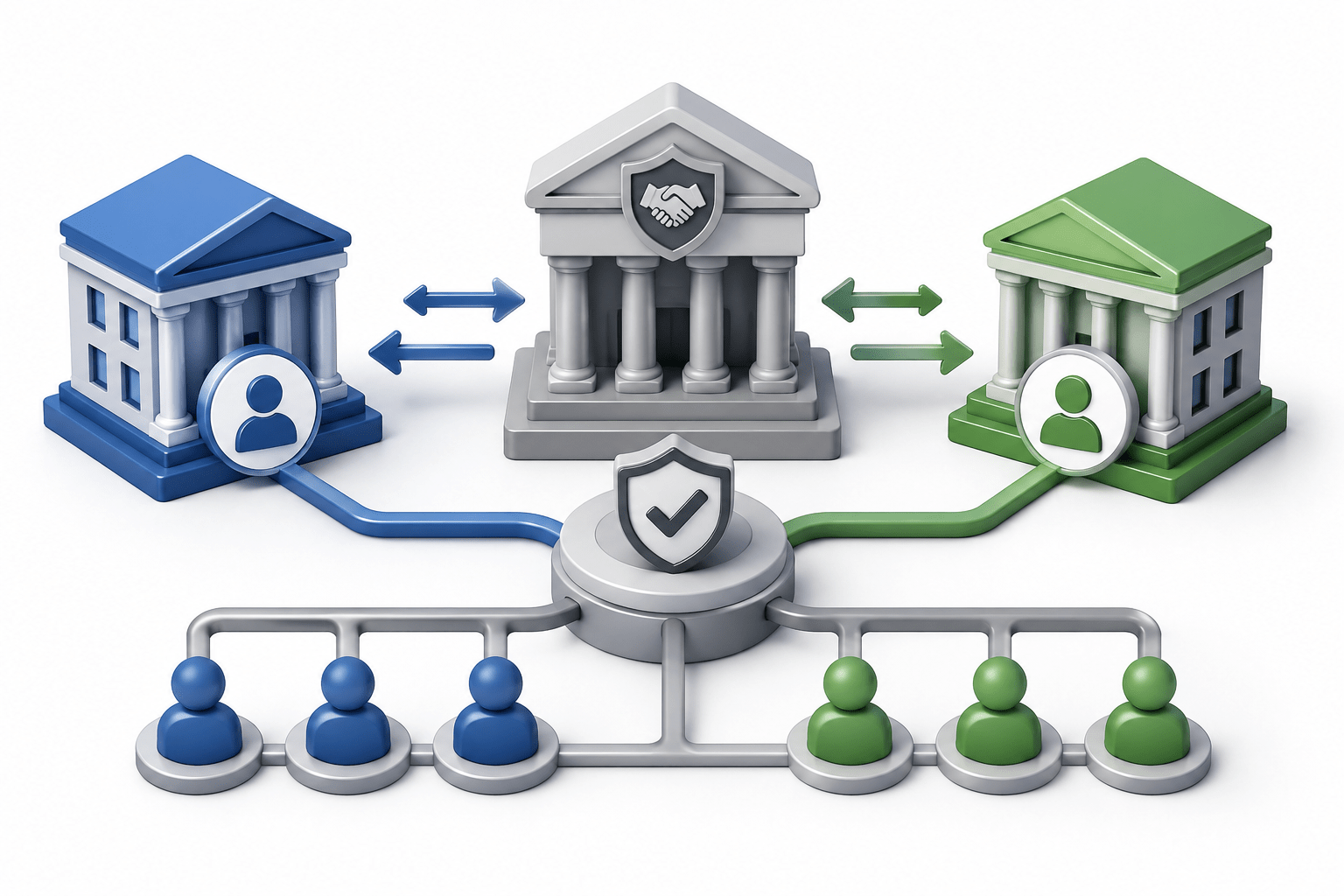

Learning Outcome
5
Apply concepts to real-world financial decisions
4
Understand the impact on GDP, employment, and investor confidence
3
Identify major participants and their roles
2
Explain key functions: capital formation, liquidity, and price discovery
1
Define a stock exchange and its role in the financial system
Water Network Analogy
Money = Water
Investors = Reservoirs storing water
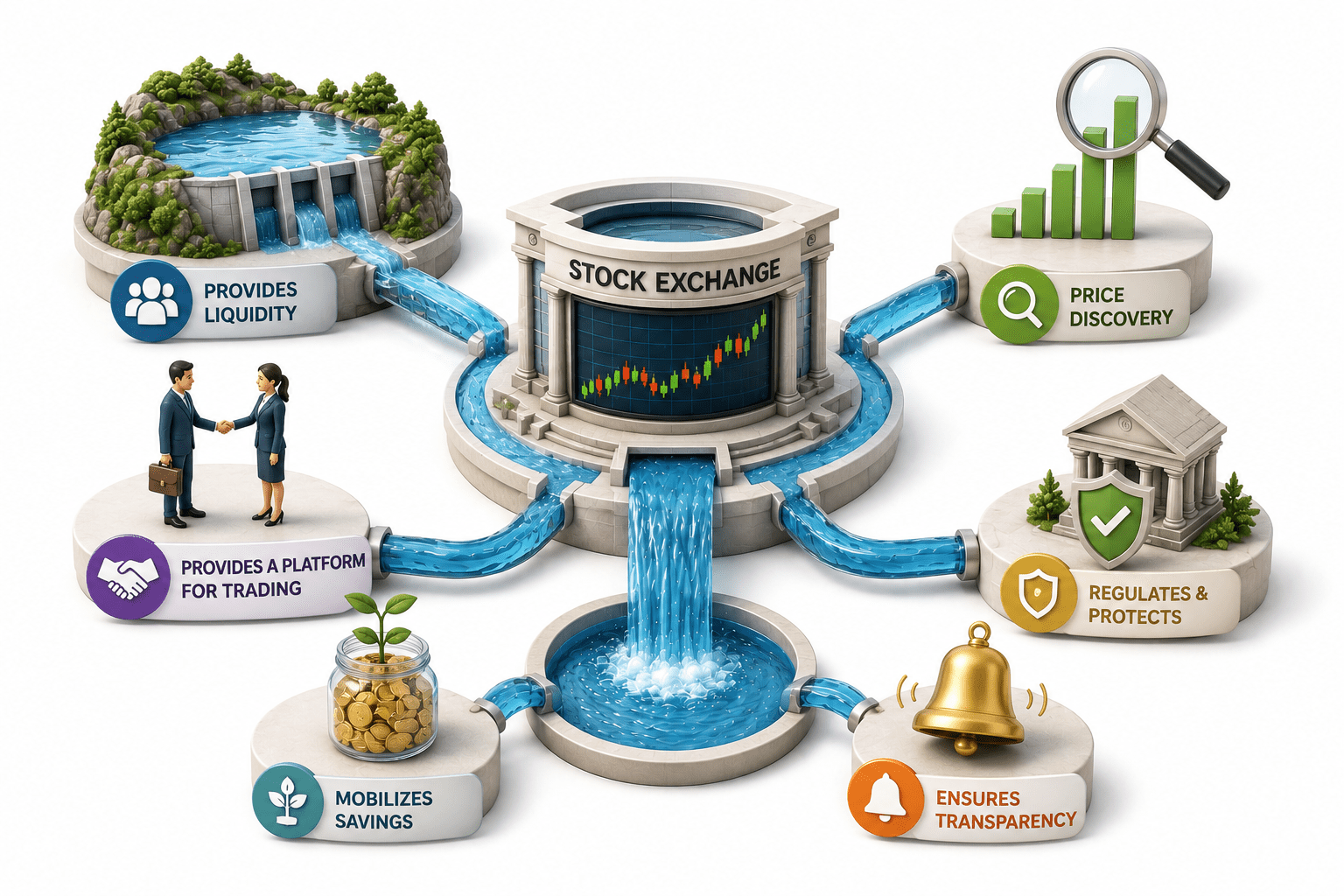
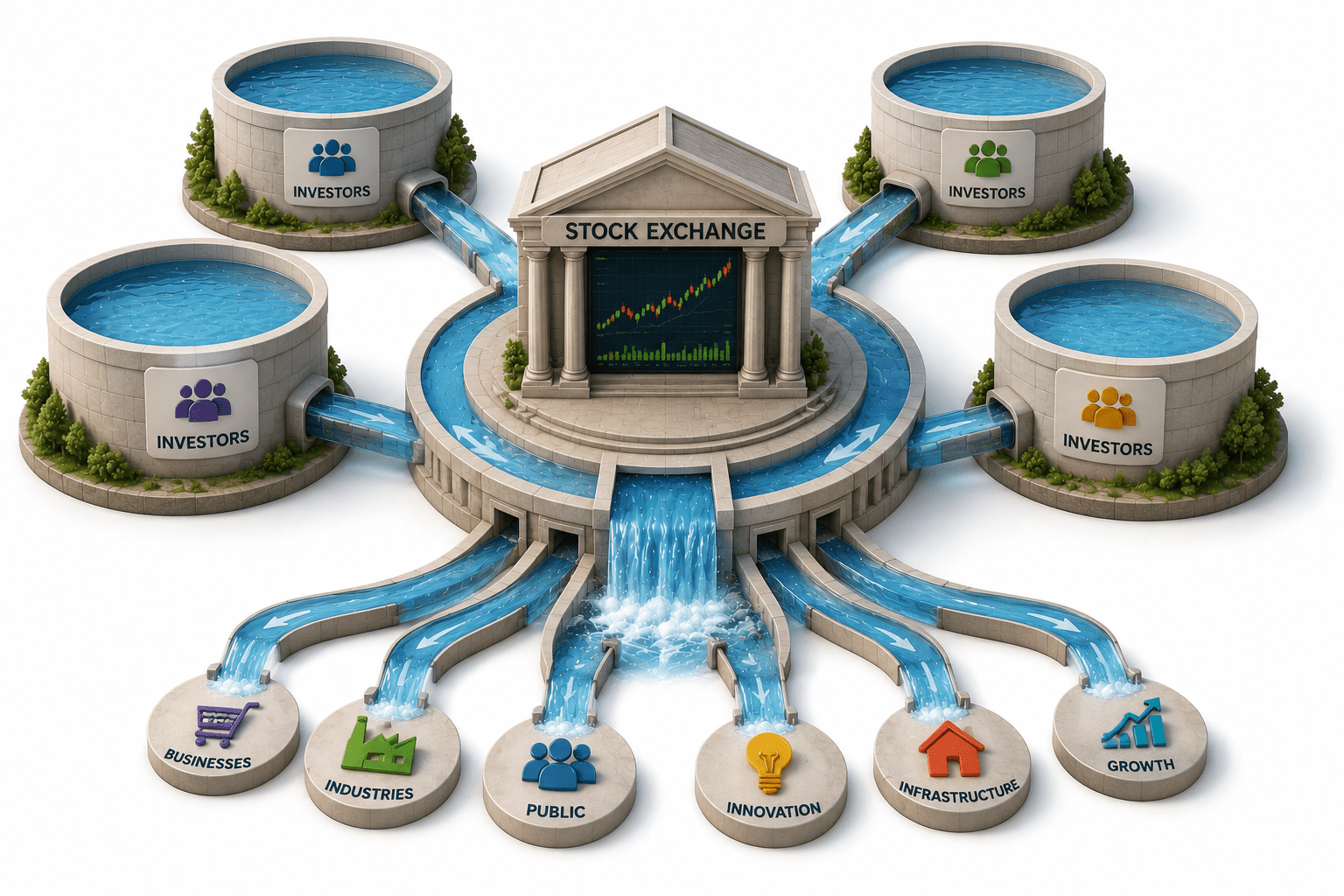
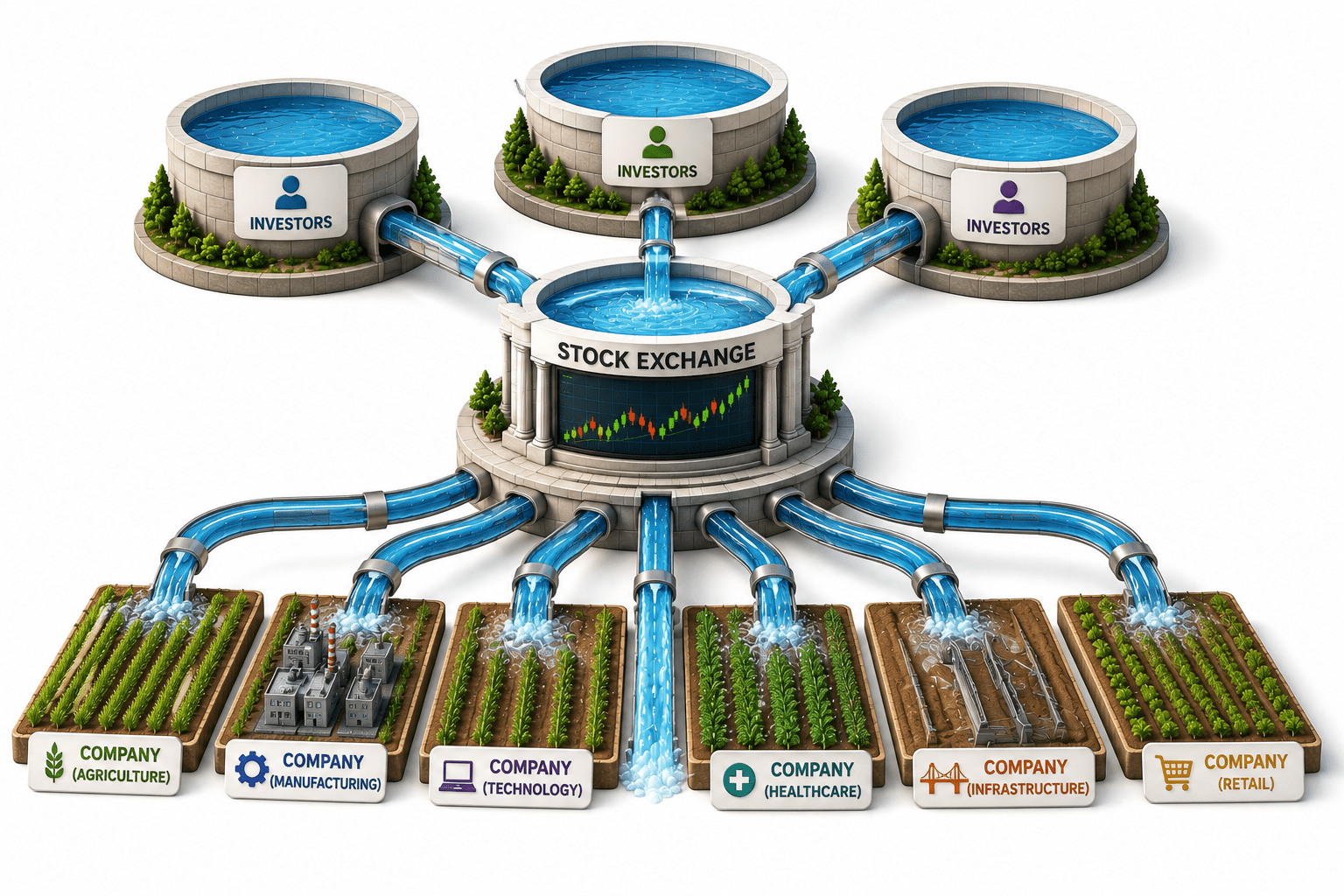
Companies = Fields needing irrigation

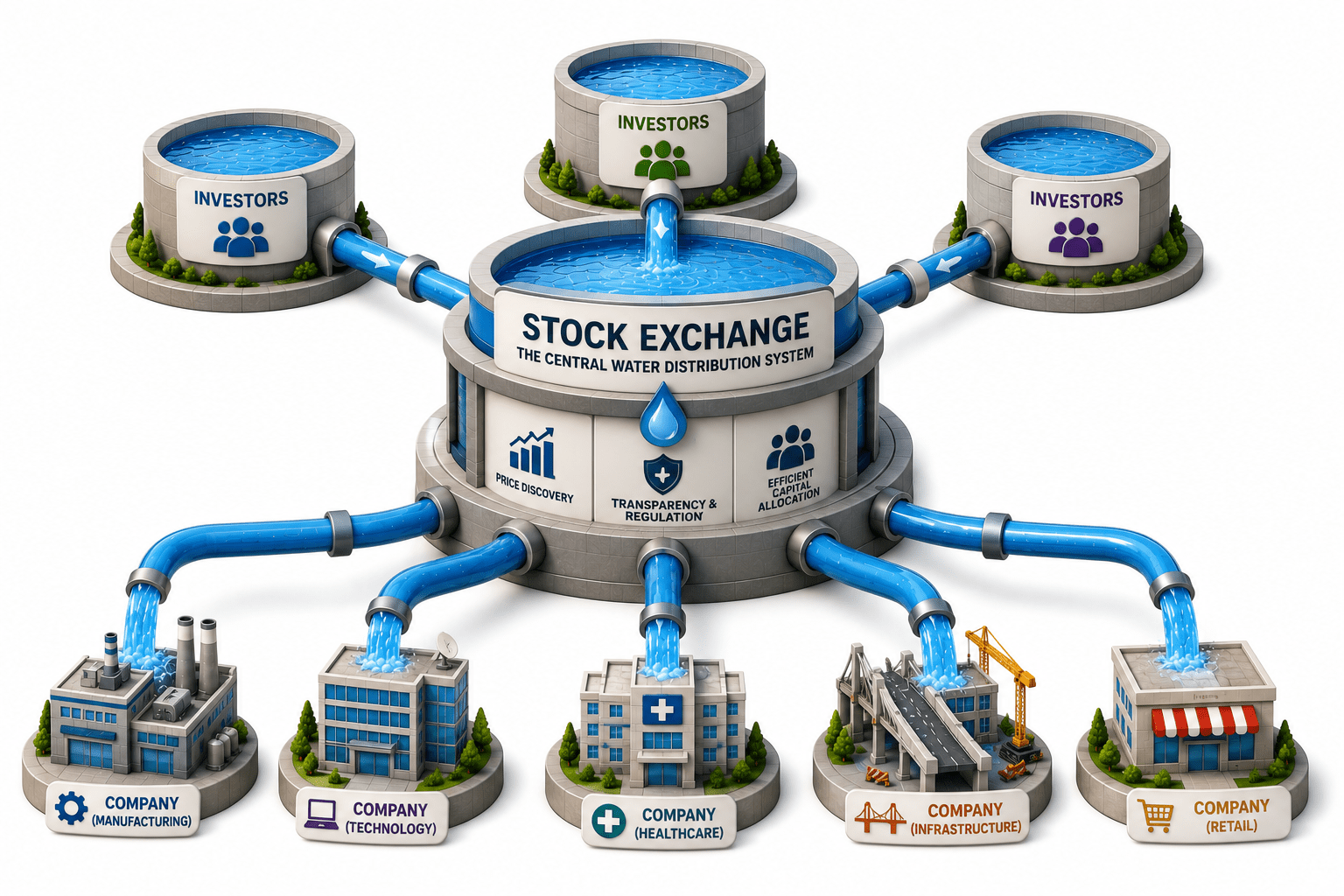
Stock Exchange = The central water distribution system
Regulators = Water quality inspectors
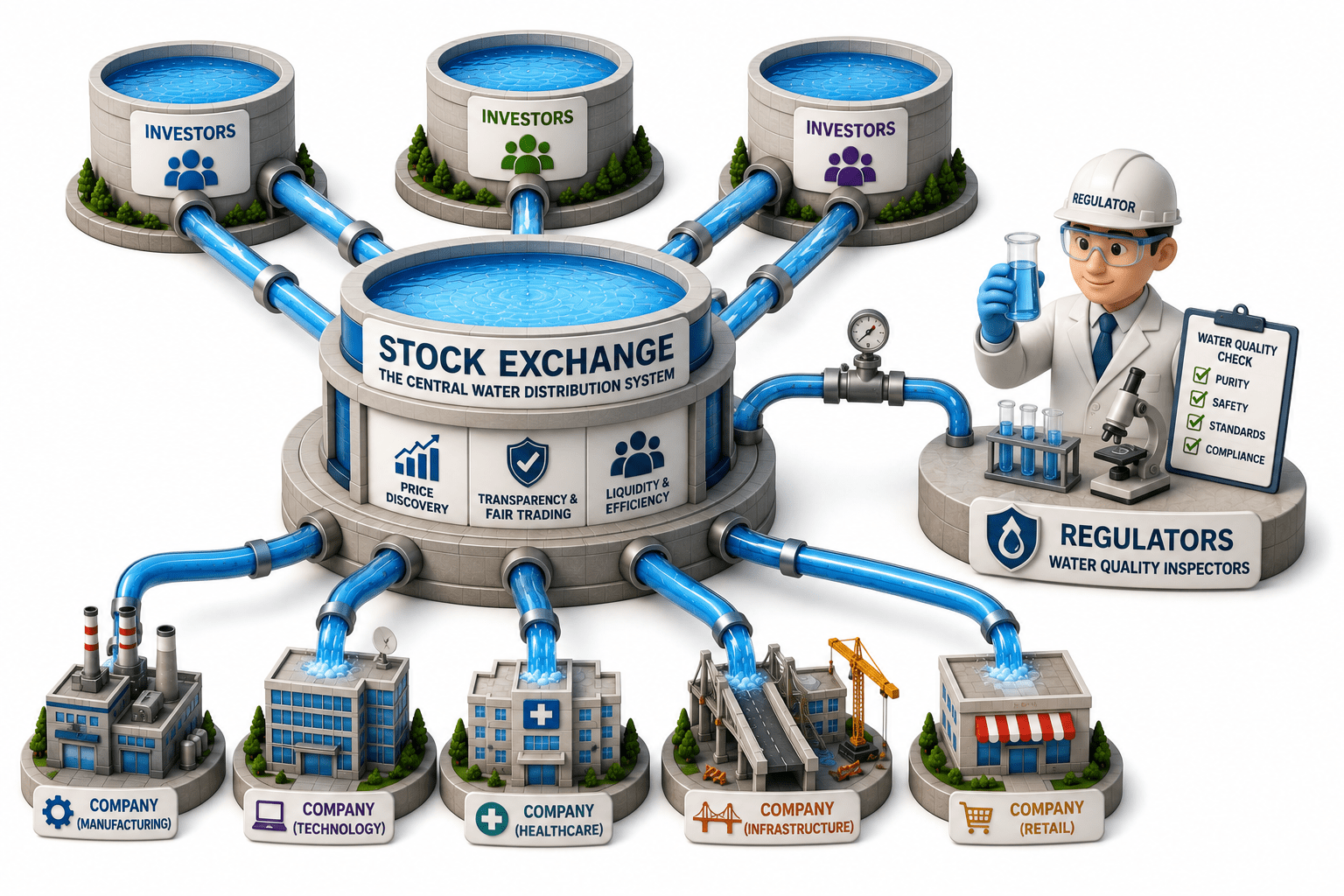
Without exchanges, capital flow can become uneven and inefficient.
Stock exchanges ensure controlled and smooth movement of funds.
They provide liquidity, transparency, and fair price discovery.
Exchanges help maintain a balanced and productive financial ecosystem.


Transition to concept
Money in the economy works like water in a city, and the stock exchange acts as the pipeline connecting investors and companies. It ensures money flows smoothly, fairly, and efficiently to support business growth and economic balance.
What is a Stock Exchange?
A stock exchange is an organized and regulated financial market.
It enables buying and selling of securities like equities, bonds, and derivatives.
Securities are listed and traded through the exchange.
It operates under legal and regulatory supervision.




Primary Market
Companies issue NEW shares to the public for the first time (IPO — Initial Public Offering). Funds go directly to the company.
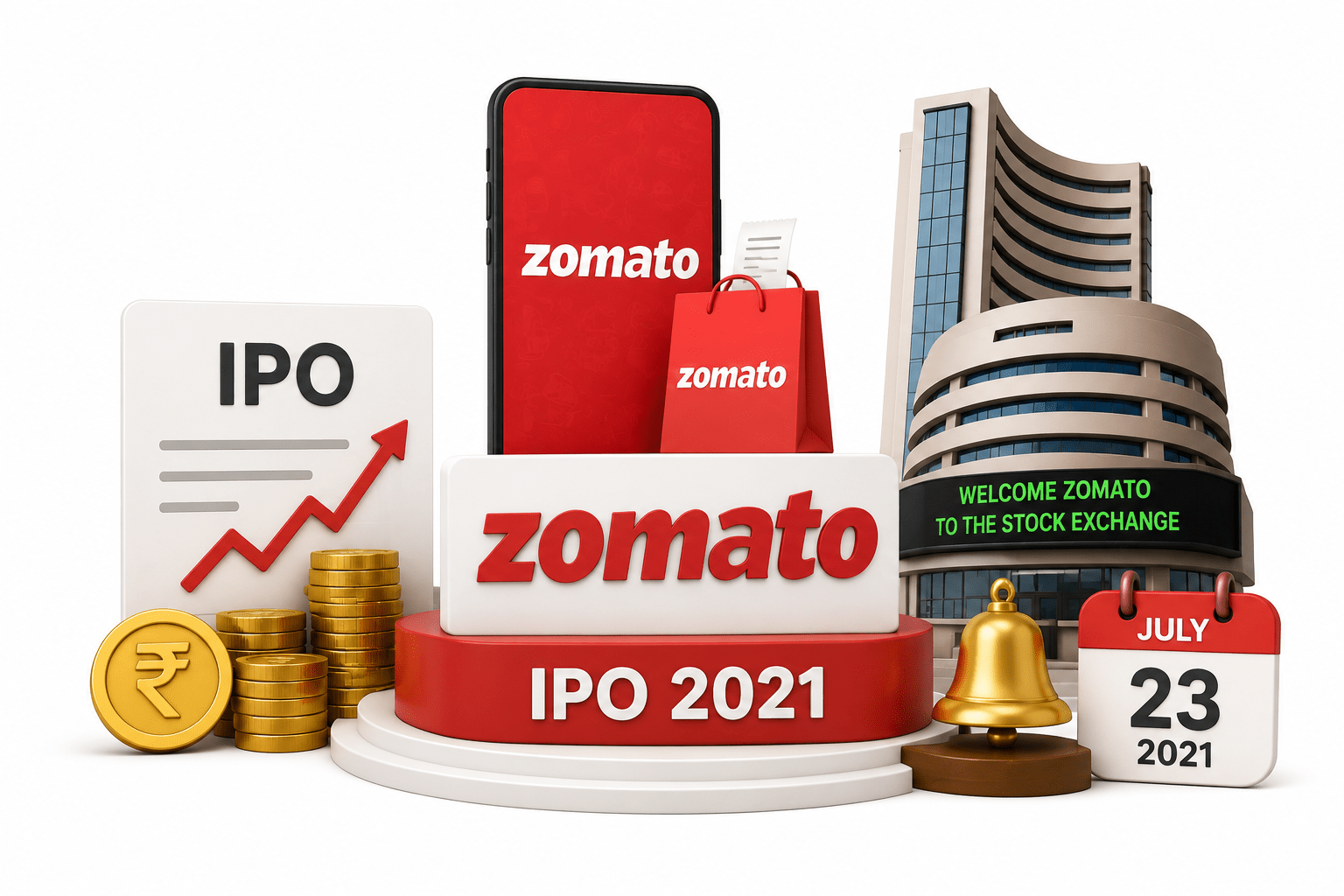
For Example

Zomato issued shares to the public through an IPO.
Investors applied for shares, and funds went directly to the company.
The company used the capital for business expansion.
This process takes place in the primary market.
Shares were listed on the stock exchange after the IPO.
Secondary Market

Existing shares are traded between investors. The company does NOT receive funds. This is where daily trading occurs.
For Example
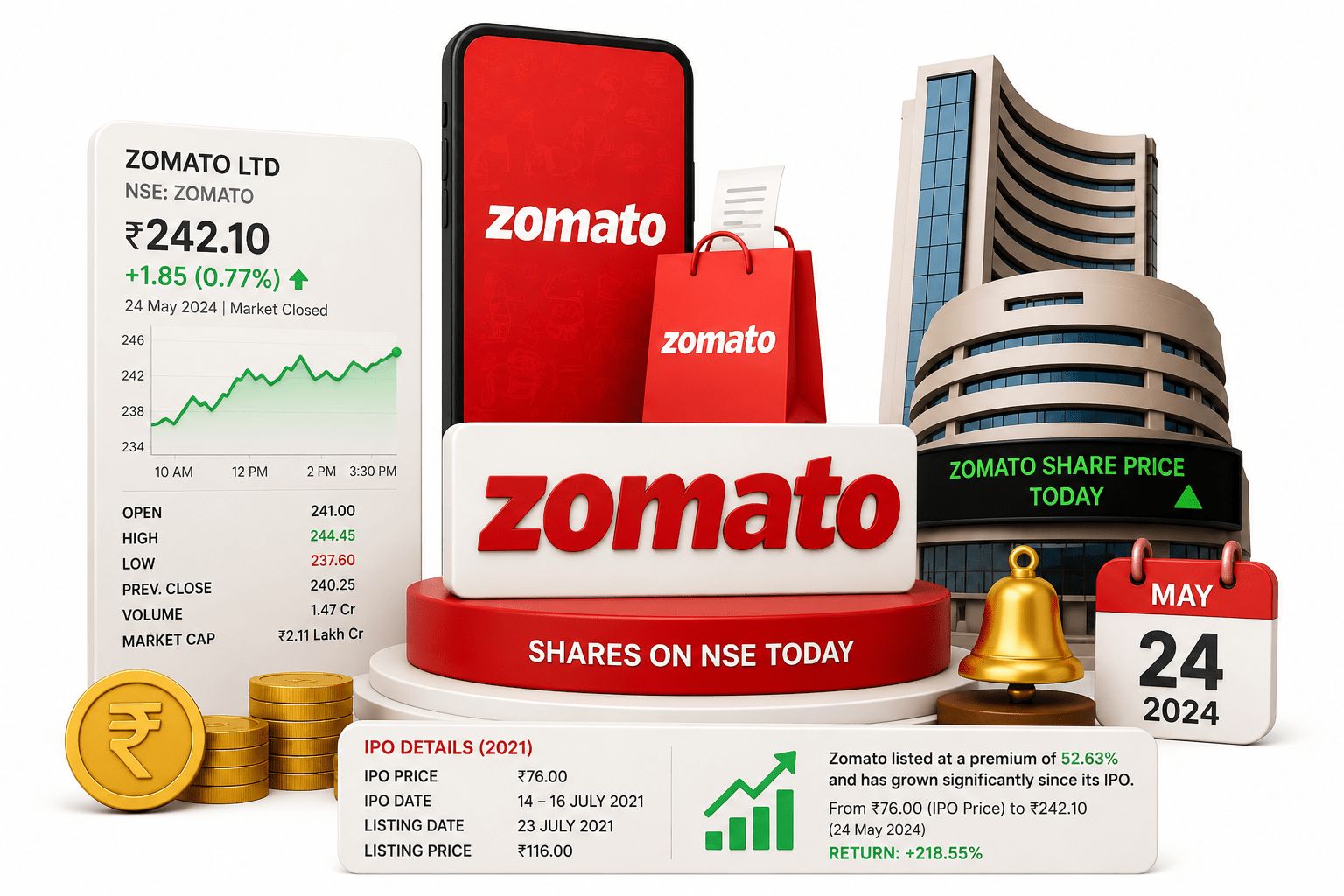
Zomato shares are traded daily on NSE of India and BSE Limited after listing.
Investors can buy shares through apps like Zerodha or Groww.
The money goes to the existing shareholder selling the shares, not to Zomato.
This trading happens in the secondary market.
Example
India :
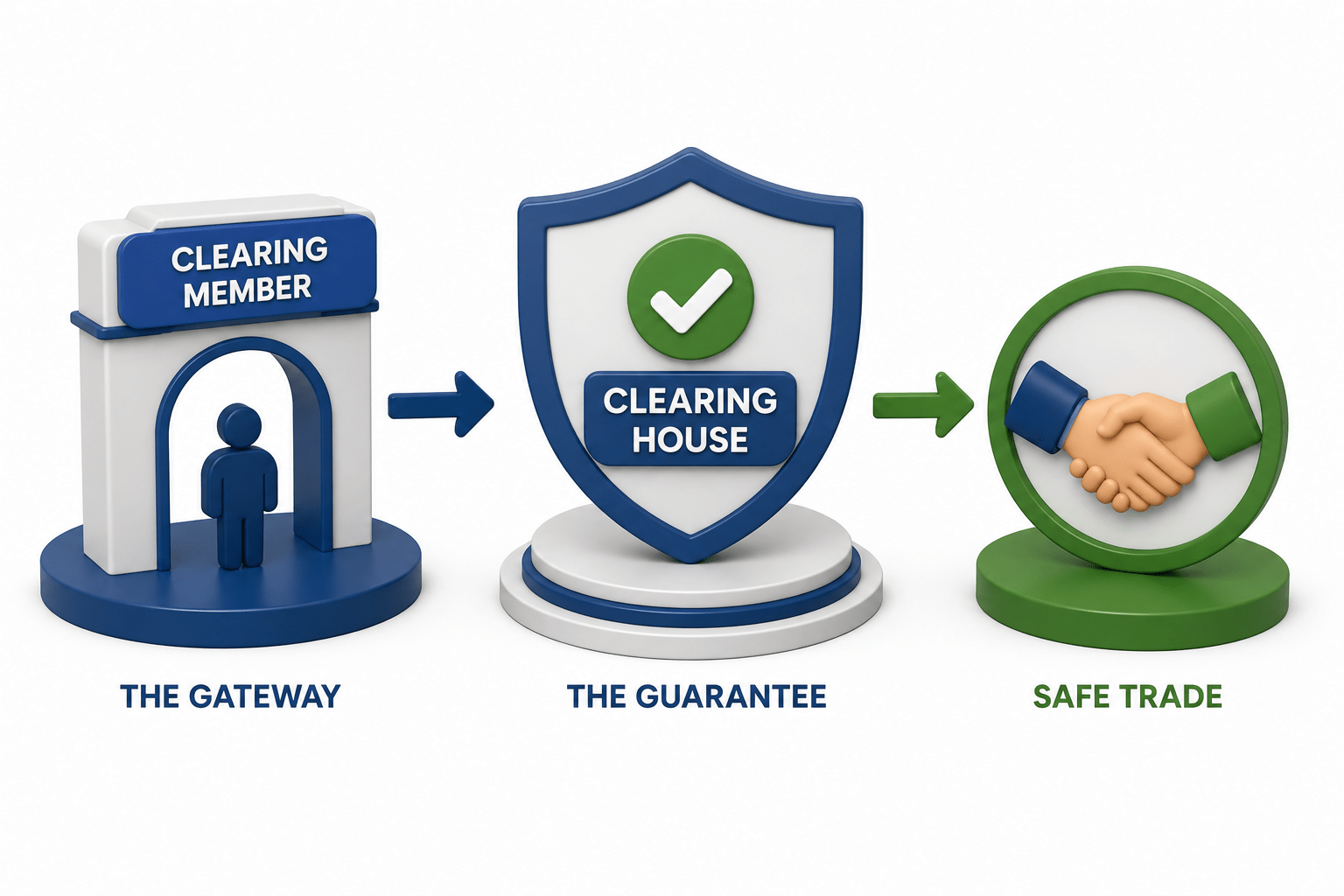
If you trade futures through Zerodha, Zerodha acts as the clearing member.
Global :
Banks like JPMorgan, Goldman Sachs, and Barclays are clearing members of LCH and DTCC
It posts your margin to NSE Clearing and is responsible if you default. Other clearing members in India include HDFC Bank, ICICI Bank, and Kotak Mahindra Bank.
Smaller brokers who cannot qualify as clearing members route their trades through these banks.


How Do They Work Together?
Investors place orders through brokers.
Brokers send trades to the exchange for matching.
Clearing members submit matched trades to the clearing house.
The clearing house guarantees settlement within T+1 day.
It works in the background to ensure safe and timely trades.

Summary
5
Understand how netting reduces settlement obligations.
4
Learn the role of initial and variation margins in risk management.
3
Understand novation in trade settlement.
2
Learn how clearing members connect traders with the CCP.
1
Understand how clearing houses guarantee settlements and reduce risk.
Quiz
Why do Clearing Houses collect margins from Clearing Members?
A. To increase stock prices
B. To pay dividends to investors
C. To reduce the risk of default during settlement
D. To promote IPOs

Quiz-Answer
Why do Clearing Houses collect margins from Clearing Members?
A. To increase stock prices
B. To pay dividends to investors
C. To reduce the risk of default during settlement
D. To promote IPOs